
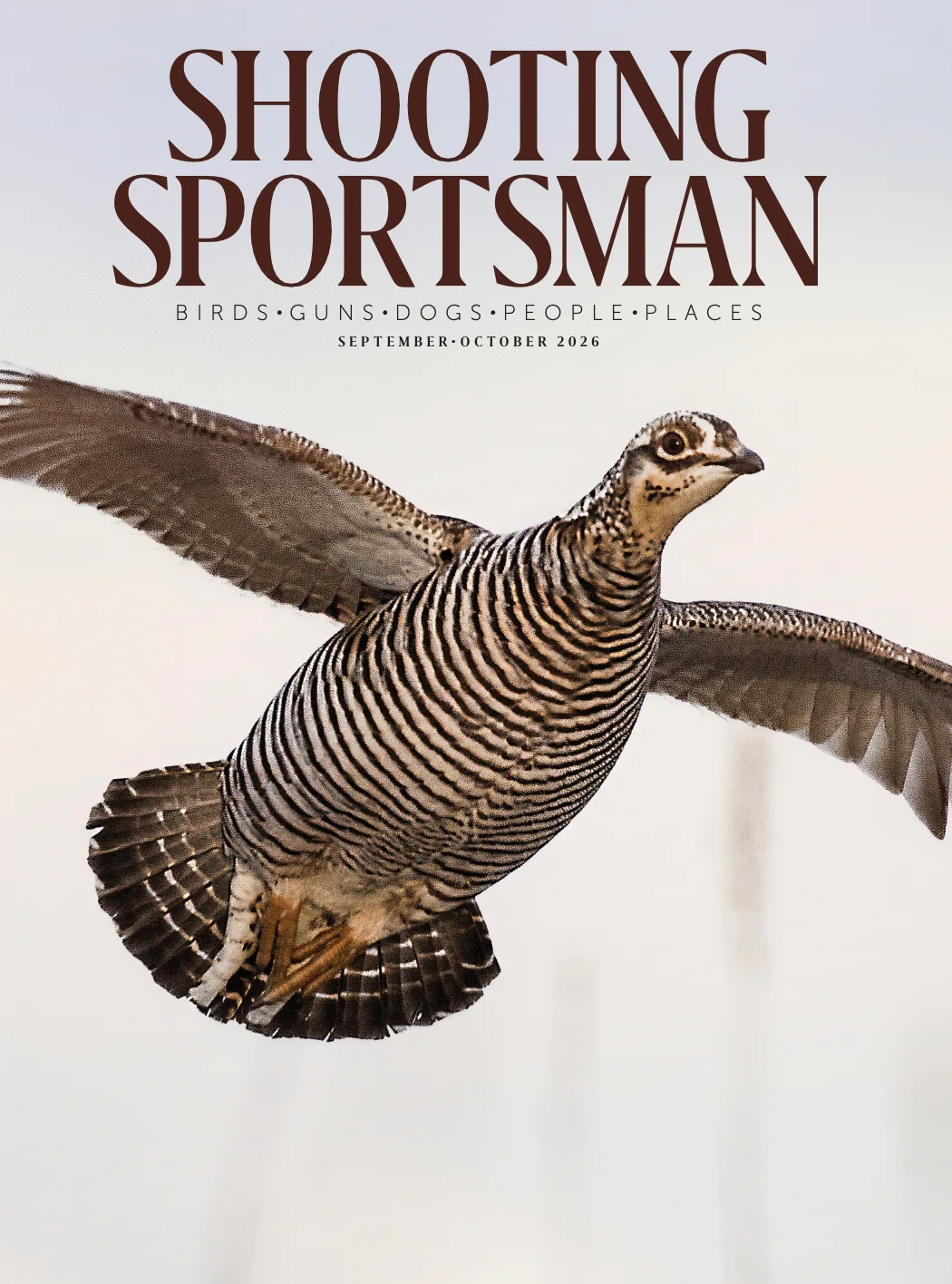
It's amazing how quickly you can adjust to new patterns. What is suddenly new and almost foreign can reboot your brain and retrain how you see the world. I had such a pattern reset this past November, courtesy of Guitar Ranches, in Spur, Texas, and generous Texans who proved something improbable to me: that wild, palm-size quail can not only survive but also thrive in harsh conditions. This thrilling survival story says nothing of the ground- and sky-based predators relentlessly pursuing the birds, as bobcats creep close and kettles of migrating Cooper’s, northern harrier and redtail hawks swirl overhead. This special ranch—the beloved, third-generation domain of owner Phil Guitar—is a wild-quail hunter’s Eden and a stirring blend of conservation and agriculture.
On our early-season trip we hunted the 22,000-acre Spur Ranch, which lies roughly an hour east of Lubbock and 90 minutes northwest of Abilene and is one of six ranches that comprise Guitar Ranches. The carefully kept property sits where West Texas’ High Plains region transitions to the state’s Rolling Plains. The ranch has a ring of five log-cabin-style cottages, two bunkhouses and a family-style cook shack that are an oasis of Western-style comfort. Together they are a public-facing slice of the family’s 150,000 acres accumulated over decades to support cattle, cotton and now hunting. Today Spur Ranch hosts bird, deer and wild-hog hunters on lands pierced by cedar-flanked slopes and graceful slot canyons shaped in sandstone by millennia of downpours. The grounds hold an incalculable number of wild bobwhites mixed with blue (scaled) quail—all sharing the same land and providing a pleasant surprise with every covey. Points on the well-managed ranch can produce either bobwhites or blue quail. Guides use a variety of pointing dogs to find birds and English cockers to do the retrieving.
I confess that I didn’t know that hunting opportunities offered by operations like Guitar Ranches still exist—and that mere mortals could participate in this sport of kings. It turns out that the Republic of Texas is actually a Southern kingdom of private fiefdoms. As Guitar Ranches game biologist Lloyd Lacoste would later explain: “There are fewer than 300,000 acres of public-access hunting land in all of Texas. And those public lands get hunted hard. If you want good hunting, you need personal connections to find top opportunities. And they don’t come cheap.” But Guitar Ranches is an exception—a hunting lodge that prioritizes wild birds. In Texas and in most wild-quail country, that’s a trip worth taking.
Making the trip even more special was that I was joined by Reid Bryant, the Senior Manager of Wingshooting Services at Orvis and a Shooting Sportsman Editor at Large, and Matt Nelson, something of an upland impresario who not only consults and guides at Guitar Ranches but is also the president of Webley & Scott North America and W&S Imports.
It was mid-November, and Reid and I met in the painfully early predawn hours at Albany International Airport, in New York. At lunchtime we touched down in Lubbock, Texas, whereupon we jumped in a flashy rental car and headed to the ranch. We made it in time to shoot the 14-station sporting clays course before an appropriately homestyle dinner of steak, ribs (every meal at the ranch seemed to come with a “side” of Texas BBQ), veggies and a memorable square of German chocolate cake.
But this trip wasn’t just about clays and cake; it was about wild quail—and lots of them. The following morning was comfortably cool, with Lloyd, formerly with the Rolling Plains Quail Research Foundation, educating me on a rich conservation mix of ragweed, broom weed, American basket flower, sand lily, little bluestem, silver bluestem, side oats grama and algerita (red berries). Yes, this was not just a hunt, but a much-needed and much-appreciated biology lesson on the fragile ecology surrounding wild quail.
As Lloyd explained: “Mr. Guitar prioritizes conservation. Every decision we make is guided by what this land needs to remain healthy and support not only native populations of quail, but also the food and water sources they need. We never overgraze with our cattle, and we make sure to plant and protect habitat. It’s not a mystery what quail need, but it takes a real commitment.”
Reid and I soon piled into a generously sized Can-Am UTV with Matt and guide Mike Stevenson. Mike, who hailed from Mississippi, would be the lead guide on our two-day hunt. Within minutes of passing over the cattle guards, we were on a slowly warming hillside watching Mike carefully wrap the paws of his diverse kennel of pointers, English setters, Brittanys and English cockers. Protecting his athletic and carefully trained gundogs was a science in itself, as the harsh Texas terrain and hardened ground could absolutely tear up dogs’ feet. Instead of using expensive boots that could be easily lost or destroyed, Mike and the other guides first wrapped each foot with gauze; then layered over it a basic, custom-designed duct-tape pad that folded to cover the top and bottom of the paw; then secured everything with more duct tape.
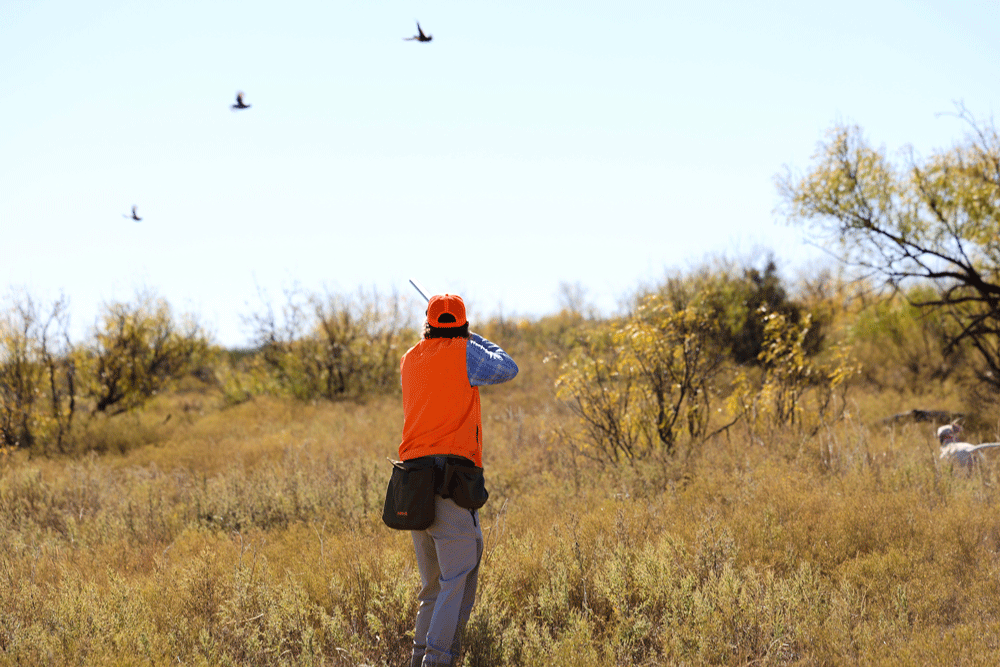
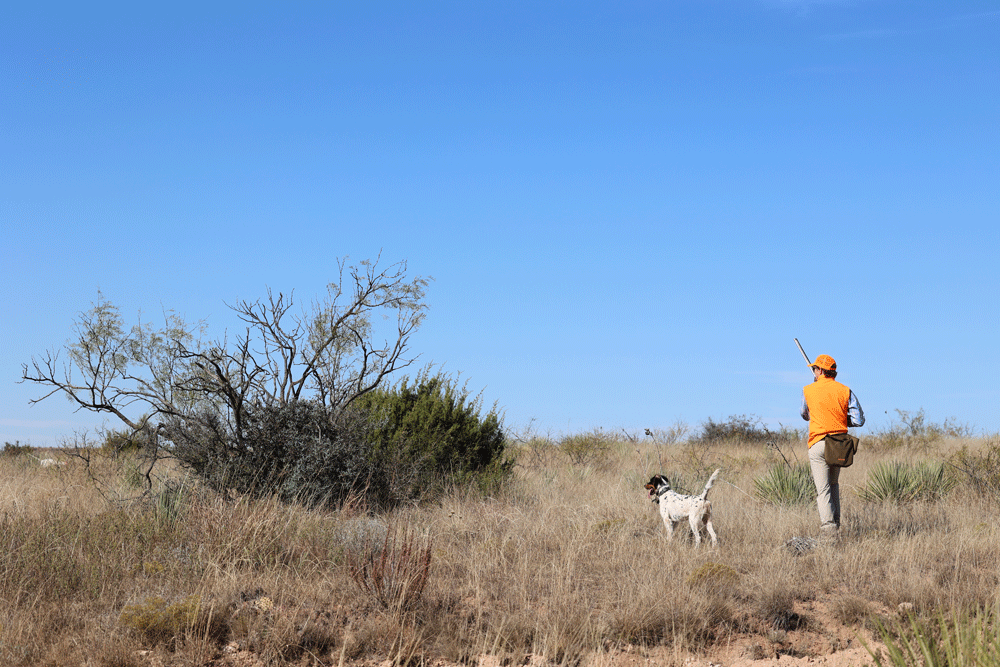
Once the taping was complete, a brace of dogs was set loose. They crisscrossed the rugged earth as we trailed behind comfortably in the UTV. Within 15 minutes they went on point, and I quickly flanked my first covey of wild quail. As I scanned the ground for any sign of movement or color, the air suddenly filled with a covey of eight or so birds. Due to my untrained shooting method, the bobs escaped simply by scrambling my consciousness. Time and time again this proved a formidable defense. It didn’t work on Reid, though, as he immediately started dropping birds. He had three in the bag before I connected with my first.
We continued working from covey to covey, careful not to pressure missed birds, so as to allow them to regroup. In between opportunities, Lloyd, riding in a second UTV with Angee Wilbur, a lovely and peppy Abilene-based photographer, would spend a few moments with us, sharing insights into the quail’s diets, habits and history.
By lunchtime we’d found what, for me, was an astonishing 11 coveys of bobwhites. They’d ranged from a half-dozen to two-dozen birds, and all had been pointed by Mike’s well-trained dogs. Many had evaded shots by flying low or putting a dog, human or UTV between them and the shooter. But with this volume of birds and the excellent dogwork, the epic opportunities on the relatively flat, scrubby ground had far exceeded what I’d dreamed of.
For lunch we headed back to the cook shack. The large kitchen was open to the dining area, which featured a long table with 20 chairs. The cooks greeted us like old friends and made us feel welcome. The meal that day was carne asada tacos—with a side of BBQ—and tres leches cake. During lunch we also were introduced to Phil Guitar and Kirby Andrews, the chief executive officer of Guitar Estate Management. Both were immensely proud to welcome us to the ranch and walk us around the new lounge that was under construction.
That afternoon the action slowed, as dry, warm and breezy conditions made scenting difficult for the dogs. Still, in little more than three hours we flushed four more coveys of bobs. We enjoyed the steady banter of guides and hunters, learning about each other while assiduously eyeing the dogs for any hint of birdiness. While the points weren’t as frequent as they had been in the morning, by any reasonable estimate it was a gem of an afternoon—all amid the prehistoric landscape of Texas’ Rolling Plains, with views extending to the limits of human sight.
The next morning was our final one at the ranch. Unfortunately, the hunting was painfully slow for Mike and Matt. A typical day on the property produces as many as 25 to 30 coveys of bobs and blue quail, but in the eyes of our experienced guides, this early-season hunt was offering more of a healthy appetizer than a full entrée.
“We need a good hard freeze to knock back the grasses,” Matt said.
“A little rain would help too,” Mike added.
“There are lots of birds all season,” Lloyd said, “but later can be better. January, February and March are dynamite.”
And we could see the dogs struggling to find scent as the day warmed. With an inkling that the birds were there and a desire to work off the prodigious meals, the group decided to do some hoofing—dancing around prickly pear and circling mesquites. And with the dogs working hard around us, we soon ran into birds.
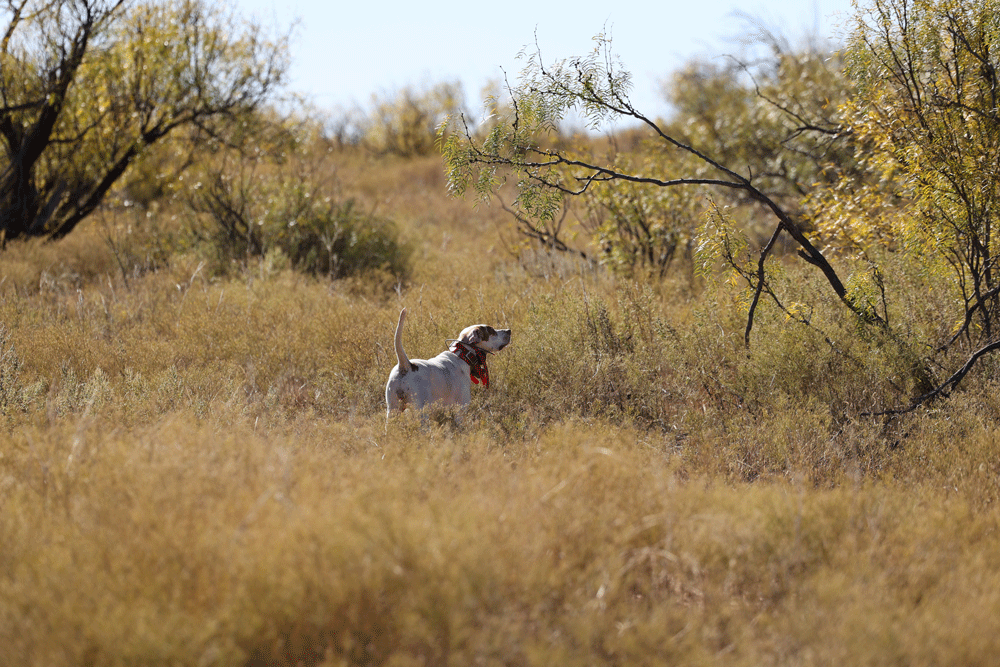
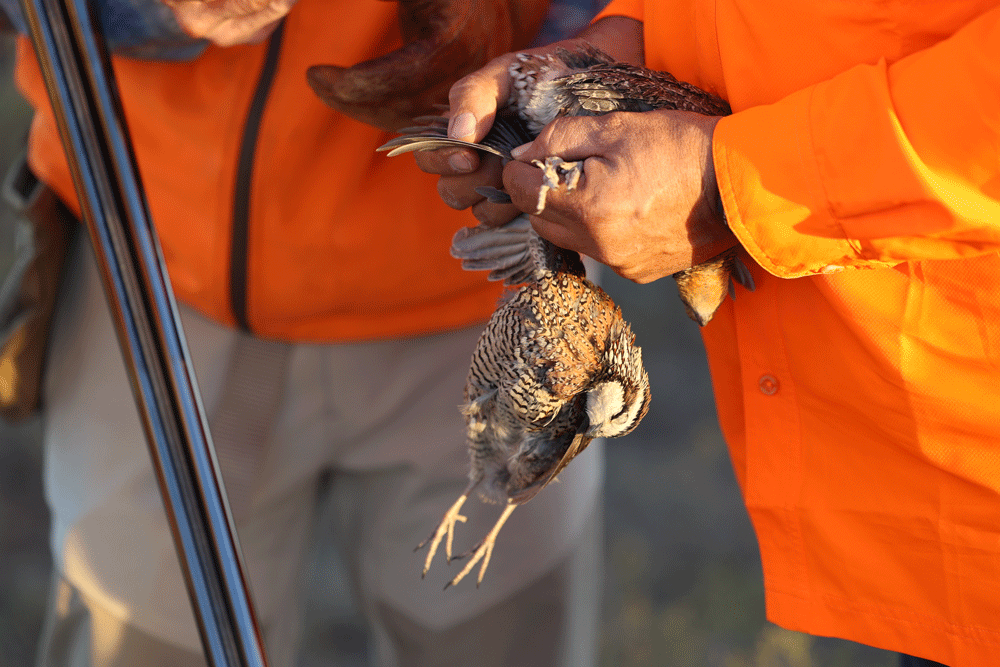
The technique produced some good shots too. In fact, it provided my Kodak moment when a brace of bobwhites launched just a few yards from me and I turned, sharpened my focus and at 35 yards tumbled one of the birds. In that moment I regained my senses, remembering it wasn’t about numbers but rather the deep and profound appreciation for everything Guitar Ranches has stewarded. The commitment to habitat and conservation of the precious birds far outweighed the commercial gain. And instead of opening the gates for a few privileged souls, Mr. Guitar was making the opportunity available to anyone with the will and drive to experience true wild-quail hunting.
I confess that on some hunts the call of home and hunting fatigue can have me ready to depart, but that wasn’t the case here. After lunch we enjoyed one final jaunt. We moved from cover to cover, seeking to overcome the tough scenting conditions. We focused on water and stock tanks, looking intently for any sign of movement that might create opportunities. Through it all, we found another four satisfying coveys of bobs.
And as the sun started to kiss the horizon, I spied a fist-size patch of bluish-gray sneaking through the bluestem. Reid and I piled out of the UTV and surrounded the spot. Seconds later a covey of a dozen birds blew out. Reid was in perfect position and dropped a beautiful blue quail flying straight away.
This final nod to diversity was a fitting conclusion to our singular hunt.
Read our Newsletter
Stay connected to the best of wingshooting & fine guns with additional free content, special offers and promotions.