
By Tom Keer
From our July/August 2026 issue
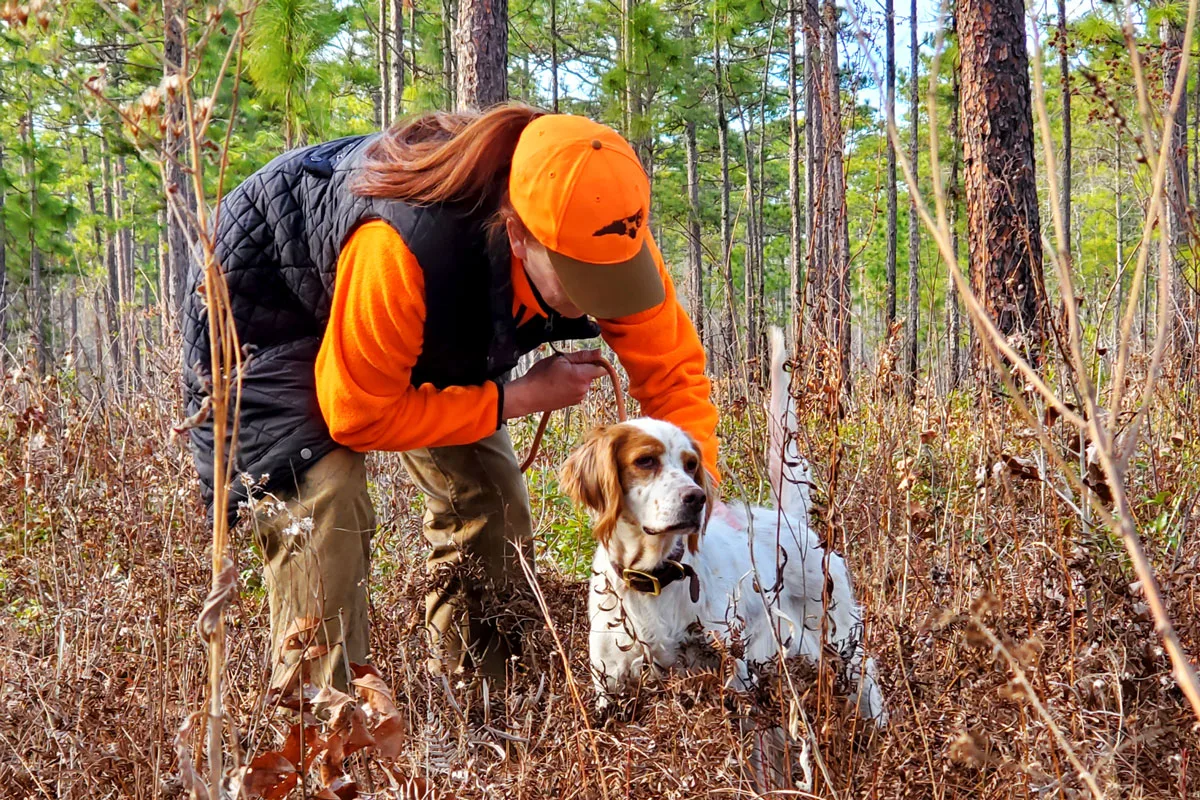
Pepper, my buddy’s black-and-white springer, wasn’t a headstrong dog by any means. But she sure wasn’t paying a lick of attention to his recall commands. There was a reason for it, and it was an honest mistake we all can make. My buddy first called, “Here,” and when Pepper didn’t respond, there were a few “Comes,” followed by “Come here,” then “Come over here” and finally “Get your ass over here!” With each command came an increase in volume until my buddy’s angry voice bellowed through the coulee. Pepper kept on with her search for birds, partly because she was doing her job. But the other reason was that the repeated and changing commands sent mixed messages and simply sounded like Charlie Brown’s teacher’s “Whah, whah, whah, whah” in an episode of Peanuts.
Consistent commands are key. If a handler isn’t giving consistent commands, then a dog isn’t going to understand what is expected of it. Changing commands is one of the handler problems most cited by trainers with whom I’ve spoken. Their clients have said that the reason for changing commands is because a dog isn’t listening and that they are trying to find something that works. What works is short, daily sessions with a check cord followed by a treat. Give the “Here” or “Come” command (whichever you use), and if the dog doesn’t respond, then reel it in with the check cord and give it praise and a treat. Dogs that trot in under their own power automatically get praise and a treat.
Working through the issue is key; changing the command isn’t the way to solve the problem. Identify the commands you want to use, make sure everyone in your house is on board with them and practice regularly.
Handlers often need to be handled on a second and related issue: the frequency of giving a command. One and done is the rule of thumb. Repeating a command tells the pup that obeying the directive the first time is optional. Make every effort to get pups to respond on the initial command. There should be no praise or treats if they don’t comply, and lots of praise and treats if they do.
Pro trainers work with more dogs in a year than the average hunter owns in a lifetime. Many notice that while dogs frequently need correction, so do their handlers. Changing commands from “Come” to “Come over here” is so simple that it resembles the famous quote by Muhammad Ali: “It isn’t the mountains ahead to climb that wear you out; it’s the pebble in your shoe.” A lot goes into running dogs, and sometimes it’s hard for a handler to recognize that his or her mistakes are hindering outstanding dogwork. Because of that, many pros offer handlers’ clinics designed to help owners get the most out of their dogs. Following are some of the common issues they see that, if fixed, can strengthen and improve the dog-and-handler relationship.
Chris Akin (Webb Footed Kennels, Jonesboro, Arkansas)
“Pay attention to your dog’s needs and desires and not your own,” said Chris Akin. “For example, steadiness is a need we all have. But when ducks are circling overhead, it’s easy for a handler to focus on the ducks. When the owner’s attention is on the ducks, he doesn’t notice that the dog is whimpering or moving around. The next phase is that the dog is so excited that he breaks, and that’s usually on the final approach. To solve that issue, a handler should rack his shotgun and give his full attention to his dog. Pet the dog and talk to him softly to get him to calm down. Use a lead to keep him from bolting, and when he behaves, reward him with a treat. When you pull him out of the kennel for his next workout or hunt, get him under control immediately. Keep him calm, walk him around, talk quietly to him and reassure him that he’s doing well. His reward will come when he gets feathers in his mouth.”
Mark Fulmer (Sarahsetter Kennels, Aiken, South Carolina)
“Repetitions make the master, so work on basics until they are second nature for both you and your dog,” said Mark Fulmer. “Forget about being a drill sergeant, and instead be your dog’s best friend. First, give him clear directives of what you want him to do. They should be short and easy tasks when he’s a puppy, and after he shows mastery, then give him more-challenging tasks. And second, reward him for good behavior. Pat his head, rub him all over, talk to him in a friendly voice and be happy around him. Dogs will see the work as fun and the reward as pleasurable, and that will create a bond between handler and dog. The stronger the bond, the easier it is to train. As handlers, we’re in it for the dogs. We’re a team, and we’ve all got something to learn. The next time the team breaks down, take a moment to self-assess.”
Al Arthur (Sandhill Kennels, Lincolnton, Georgia)
Al Arthur recommends that handlers work to “Develop your dog’s concentration. For dogs to reach advanced levels, they’ve got to have full focus. One example that requires dogs’ total concentration is when they’re running marks. When handlers throw bumpers, they watch the bumpers. Instead, throw the bumper and watch the dog. Get him to focus on that bumper from the time it’s thrown until the time it hits the water. No head swinging is allowed—and that head bobbing usually comes from dogs that are running multiple marks and looking from one bumper to the next. To correct that behavior, handlers should just run one mark until the dog is 100 percent concentrating on the bumper. Then add a second mark, and stay there until the dog’s head is solid. And so on. Dogs that swing heads don’t get to fetch the bumper, and when you finally release them for a retrieve, you’ll see 100 percent effort.”
Garrett Booth (Grey’s Outfitting, Caratunk, Maine)
Garrett Booth recommends reducing the overall amount of chatter. “Don’t talk to your dogs so much,” he said. “Nervous owners tend to overhandle their dogs, and that constant and continuous chatter makes the dogs tune them out. When dogs tune out a handler, they’re not listening; and when they’re not listening, they don’t hear important commands. They’re hunting for themselves and doing whatever they want. Cut down the idle chatter, speak to your dog when you want him to do something, and follow through with praise or a correction. In most instances, less is much, much more.”
Brad Arrington (Mossy Pond Retrievers, Patterson, Georgia)
Brad Arrington suggests that handlers would do well to minimize the amount of different work and commands and to instead “Practice like you play. If you’re a duck hunter, train for real-time situations. Throwing bumpers in the backyard is fine, but to get next-level performance from your dog, run those drills from the boat or blind. While you’re there, set up decoys so your dog learns how to run or swim around them. If you practice like you play, you’ll watch your dog’s confidence increase. When it’s go time, he’ll be ready.”
Jeremy Criscoe (Whistling Wings Kennels, Union Grove, Alabama)
Jeremy Crisco is a firm believer in slowing down the pace. “A lot of handlers run at too high of a tempo,” Criscoe said. “Their dogs pick up on that pace and start running out of control. A slower pace improves communication between the handler and dog. A handler’s fast tempo gets dogs cranked up, so slow down, take your time and praise the dog when he does things correctly.”
Bob Owens (Lone Duck Kennels, Parish, New York)
Bob Owens looks at both sides of the coin and says, “Amped dogs need to be slowed down, but slow dogs need to get amped up. To get more performance from a slower, relaxed dog, you’ve got to get him fired up. Make training fun, and talk to him in a high-pitched, silly voice. That high energy ramps up chill dogs and gets them fired up for training. From that comes drive and confidence, which are a solid foundation to build on.”
Tom Keer is a freelance writer who lives on Cape Cod, Massachusetts. He loves all sporting dogs and is a setter man.
Read our Newsletter
Stay connected to the best of wingshooting & fine guns with additional free content, special offers and promotions.