From our September/October 2026 issue
Cow Skull was a river-bottom covert that never disappointed. It was so good because melting winter snowpack combined with April showers totally flooded the cover. The alders and poplars soaked up much of the water, but even so the ground stayed damp during hot summer droughts. Resident and flight birds weren’t the only ones that thrived in this damp, birdy Valhalla; Cow Skull was also home to a motherlode of ticks.
We play a game of Russian roulette when it comes to ticks, as some‚ though not all, transmit Lyme disease and other illnesses. The real issue with contracting Lyme is that it’s an illness that can be managed but not cured. A simple, undetected bite transfers the bacteria Borrelia burgdorferi from the parasitic bug to the host’s bloodstream within days. Symptoms present quickly and in a straightforward manner, and initial issues resemble those of the flu or COVID-19: fever, chills, fatigue, muscle and joint pain, headaches and swollen lymph glands. The skin frequently breaks out in a red rash with a bull’s-eye ring surrounding the area of the bite.
These days tick talk is common in bird camps around the country, as the number of tick-borne diseases is increasing. The Centers for Disease Control and Prevention (CDC) suggests that 300,000 cases of Lyme disease are reported annually, and the organization believes that many cases are not properly diagnosed so the number may be higher.
Research by Professor Roger Lebrun, a director of graduate programs at the University of Rhode Island’s College of the Environment and Life Sciences, has recently focused on diseases transmitted by ticks and mosquitoes with a concentration on Lyme disease, West Nile virus and eastern equine encephalitis. Some of Lebrun’s research indicates that that 95% of recent cases occurred in 14 Northeastern and Midwestern states: Connecticut, Delaware, Maine, Maryland, Massachusetts, Minnesota, New Hampshire, New Jersey, New York, Pennsylvania, Rhode Island, Vermont, Virginia and Wisconsin. Bird hunters in those states should be very aware of ticks, but that does not mean that wingshooters in other states need not be cautious. The Journal of Medical Entomology, which publishes current research about diseases that stem from insects, found ticks carrying Lyme disease in nearly half of all counties in the US. As one would expect, as ticks appear in new regions, the number of cases of Lyme disease will likely increase.
Lebrun’s research indicates that high humidity creates robust tick populations, while several days of sustained low humidity results in tick reductions. In the humid North, ticks roam freely on low bushes and shrubs, but if the climate gets warmer and drier, then they will search for ground moisture, frequently found in leaf litter. Habitat management, including logging and controlled burns, reduces the amount of leaf litter. Who knew that creating young forests could also reduce the number of ticks?
Dog Days of Disease
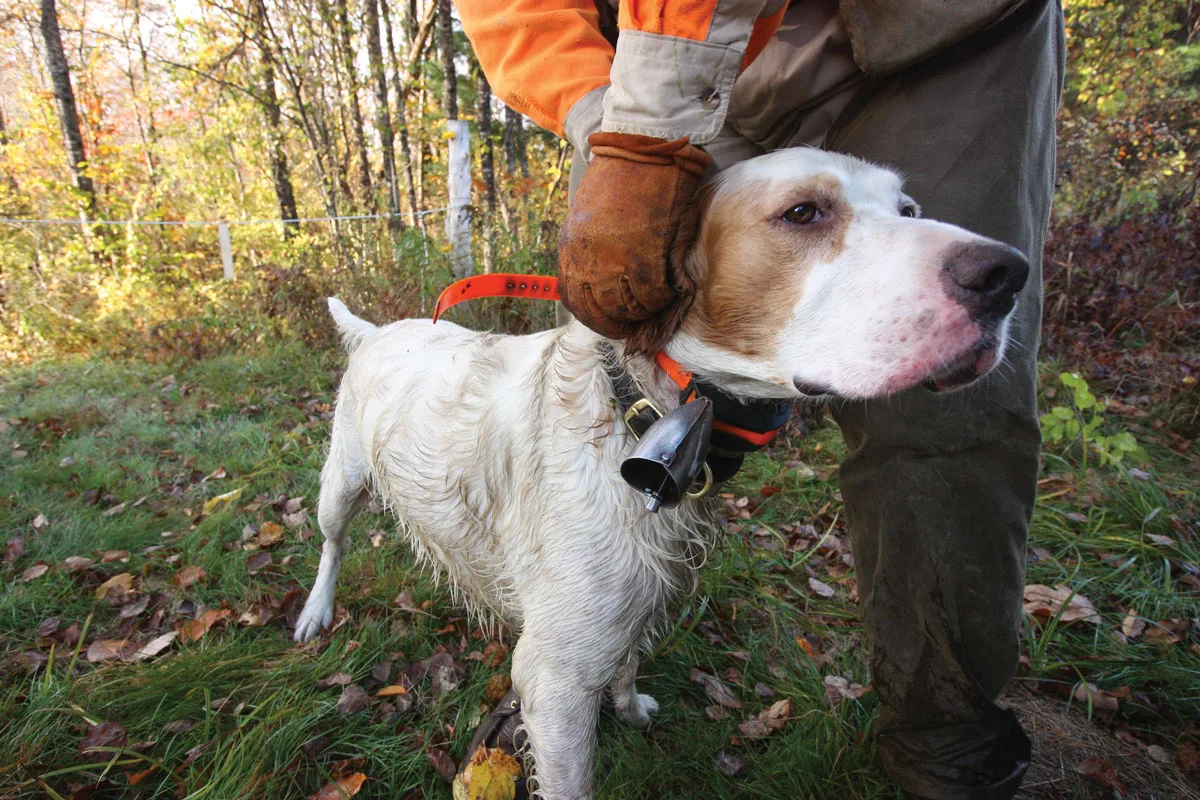
Dr. John Myers of the Animal Kare Center, in Paducah, Kentucky, says it’s important to keep dogs as tick-free as possible. “The issue is that preseason training and hunting occur during the ticks’ most active period of the year,” he said. “Lyme disease used to be easy to identify through symptoms. Traditional blood tests were PCR, ELISA, Western Blot and joint-fluid analysis. More recently the C-6 test and the Quantitative C6 test [QC6] detect a protein unique to the Borrelia bacteria and are highly effective. But the issue my colleagues and I are seeing is that the organisms are adapting to different circumstances and environments. While a gundog may carry Lyme disease from a tick bite, it may be presenting signs of other diseases. That makes the diagnosis more difficult.”
Myers says you might just call tick-borne diseases “the great pretenders.” He says that gundogs first show signs of “fever, joint pain, intermittent lameness and inflammation of blood vessels. But gundogs are tough, as we all know, so handlers must be vigilant. Visit your vet if you’re in doubt, because early detection is helpful for disease avoidance. We all want to avoid bigger problems such as internal bleeding, auto-immune issues and spleen or kidney disease. Those also aren’t easily noticed.”
Regional Nuances
When it comes to ticks and tick-borne diseases, different regions of the country have variations of their own. Following are the different types of ticks, where they are found and the diseases they carry.
AMERICAN DOG TICK: found throughout North America; carries Rocky Mountain spotted fever and tularemia.
BLACK-LEGGED TICK (AKA DEER TICK): found in the eastern half of the US as well as the North-Central region; carries anaplasmosis, babesiosis, ehrlichiosis, Lyme disease, Borrelia miyamotoi and Powassan virus.
BROWN DOG TICK: found throughout North America; carries Rocky Mountain spotted fever.
GULF COAST TICK: found on the Atlantic Coast and the Gulf of Mexico coast; carries a spotted-fever variant.
LONE STAR TICK: found in Eastern, Southeastern and South-Central regions, from Maine to West Texas; carries Heartland virus and STARI (Southern Tick-Associated Rash Illness).
ROCKY MOUNTAIN WOOD TICK: found in the Rocky Mountain states, Pacific Northwest and Southwestern Canada; carries Colorado tick fever and Rocky Mountain spotted fever.
WESTERN BLACK-LEGGED TICK: found mostly on the Pacific Coast in California, Oregon and Washington; carries anaplasmosis, babesiosis and Lyme disease.
Prevention
According to Myers, avoidance is the best way to handle tick-borne diseases. “Test your gundogs once a year,” he said. “Have your vet conduct a tick screening that looks specifically for the C-6 antibodies. Pre-training or pre-hunt prevention is important. There are a number of excellent medicines that veterinarians prescribe that can help keep dogs safe from a tick bite.
“A proper medical program can keep gundogs from contracting Lyme disease. Two initial Lyme vaccinations are given two to four weeks apart and strengthen the dog’s immune system. Ticks that latch on to the dog’s skin die between 24 and 48 hours, before the disease can be transmitted. Boosters are administered annually, with some veterinarians suggesting boosters twice a year. Other handlers increase protection by administering monthly oral chews. Simparica Trio, Bravecto and others are useful, especially for those training regularly in tick-thick areas.
“When training or hunting in an area with high concentrations of ticks, you may want to use a permethrin-based spray. If you’re really concerned about ticks, then give your dog a post-hunt bath with a flea-and-tick shampoo.”
To remove a tick attached to your dog, take a pair of forceps or tweezers, grip the tick as close to the skin as possible and pull with steady, even pressure. It’s a fallacy that if the tick’s head remains in the skin, it will still transmit Lyme disease. Leaving the head in the skin will present discomfort, but the dead tick is incapable of transferring bacteria. Circle the area with a marker, save the tick for testing and clean the area with alcohol.
While you’re taking care of your dog, Myers says to also take care of yourself. “Handlers and hunters can reduce tick contacts by wearing light-colored clothing, tucking pants into socks before pulling on boots and doing a tick check after walking through tall grasses,” he said. “Ticks like warm, moist areas, so they’re frequently found behind the ears, along a hairline and in the groin or armpits. Wearing clothing treated with permethrin helps, and since ticks are sometimes tough to spot, you can kill them by tossing your training or hunting clothes into the dryer and tumbling them for 10 minutes on a hot setting.”
If you train and hunt a lot, odds are good your gundog will contract a disease. “The problem with tick-borne illnesses is that they never really go away,” Myers said. “Doxycycline commonly is prescribed by veterinarians. Treatments are daily for around a month. In most instances you’ll see an improvement in your dog. That said, there is no telling whether the symptoms will return.”
Ticks need moisture to propagate, so they’re out for most of the year. When they’re young, they feed aggressively. Take care of your gundogs before and after runs. And take care of yourself too. When it comes to combating the diseases transmitted by these tiny bloodsuckers, an ounce of prevention is worth it—especially with there being no cure.
Read our Newsletter
Stay connected to the best of wingshooting & fine guns with additional free content, special offers and promotions.