From our March/April 2026 Issue
The delightful chill of the late-September dawn had already faded as I readied myself for a few hours of chukar hunting. My Border collie Tucker waited impatiently. It’s true that I tend to focus more on chukar during winter, but when the season opens, the call is there.
I gave careful consideration to items I’d added to my bag before sending Tucker forth. A pressing need to locate birds, whether I brought any home or not, loomed in my mind. Soon the heat would send us either into high-elevation grouse habitat or back to the house.
Since the previous season, our chukar population in central Wyoming had successfully accomplished one goal: reproduction. My faith in the location I was hunting ran high, thanks to a long history with the mountain and its birds. In addition, early forays chasing blue grouse in the high country had provided casual scouting opportunities. Chukar were certainly present. My plan was to start low on the slope and switchback up through the best morning feeding locations—and then not have to climb back uphill to the pickup.
I knew that chukar were plentiful but cover wasn’t, due to abnormally heavy cattle grazing. Of course, heavily grazed ground (periodically necessary) yields a burgeoning grasshopper crop the following year—and grasshoppers make chukar and grouse. With this in mind, I chose a 12-gauge choked Light Modified & Modified to deal with slightly longer flushes. Chukar place only so much trust in their ability to hide when grass is trimmed low . . . .
The hunt confirmed my suspicions, as many flushes occurred at 30 to 35 yards. But once the broods scattered into pockets of silver sage and bitterbrush amongst the cheatgrass, many birds held well and I even ended up with a few “boot-tippers.” I easily could have gotten away with less gun by being picky and patient.
Old lightning strikes within a half-mile of springs proved productive. This was no surprise, as forage-rich burn areas typically attract birds. During the early season, forage means green shoots of cheatgrass and, to an extent, grasshoppers. The birds are weening themselves off of hoppers as their protein demands subside, but they haven’t given them up entirely.
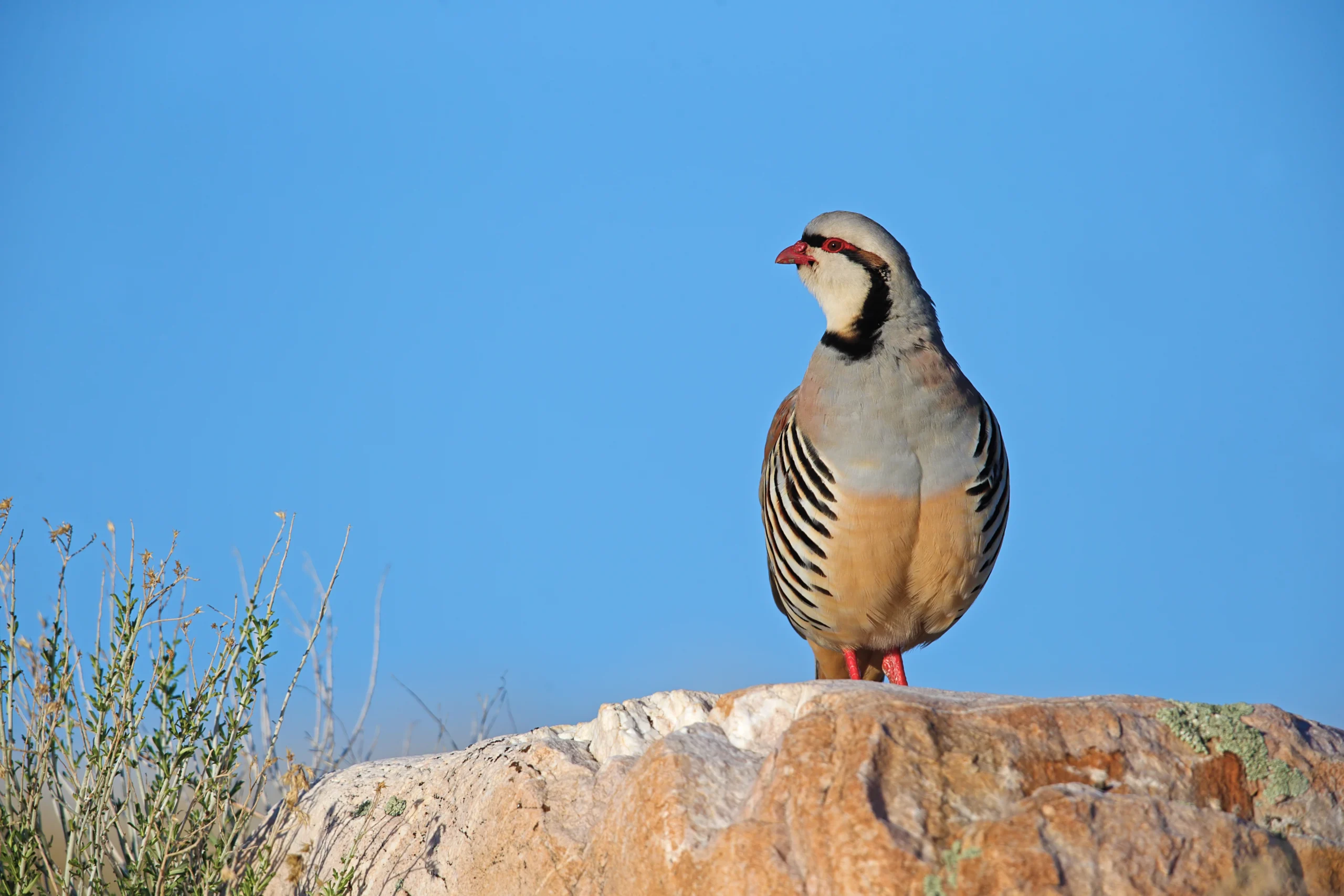
In less than two hours Tucker put up three coveys of 15 to 25 chukar. I knew we could have found more on the mid-to-upper slope where springs seep from bands of igneous soil, but I already had my limit of five. In the hand, young birds were easily distinguished from adults by subtler plumage. One covey produced meadowlark-size juveniles. The August-hatch birds certainly would be much larger in a month, their growth fueled by grasshoppers.
Hunting chukar during the first month of the season differs greatly from doing so in the winter. The challenges and hazards are different, as are the rewards. Come winter, the biggest dangers are steep snow-covered slopes—especially if boots have the wrong soles. In early autumn concerns include heat exhaustion, dehydration and rattlesnake risks for both canines and hunters until the weather cools. It’s important to carry a lot of water and take breaks as needed, and dogs should be trained to avoid snakes before the season starts. Hunting early in the morning when it’s cooler not only reduces fatigue, but it also lessens chances of snake bites, as rattlers don’t react as quickly in lower temperatures.
And one more thing about snakes. As they grow, their skin becomes opaque, and with skin covering their eyes, their vision grows cloudy, making them more vulnerable and increasing the chances of them striking until they shed. Unfortunately, this process often occurs during the early fall. When hunting new country, it’s wise to ask locals about snakes, since certain areas will concentrate them as they undergo seasonal migrations toward winter dens. Ten miles can make a huge difference.x
So far I’ve given plenty of reasons to let chukar live in peace until winter. But there are also great reasons to hunt them in September and October. For one, it’s nice to hunt in a T-shirt and lightweight, uninsulated boots. Mountainsides are not icy either—and good footing makes for good shooting.
One grand irony of the early season is that I see more hunters but have less competition for birds. Big-game seasons are underway at this time, and when I’m following Tucker, it isn’t uncommon to suddenly notice several rigs parked on a distant road across a mountainside. Bird hunters move bucks, and deer hunters know that my presence may save them a lot of searching. (This is also why wearing bright clothing is a good idea at this time . . . .) Back at the road I’m sometimes told where deer hunters have seen gamebirds. Not a bad deal.
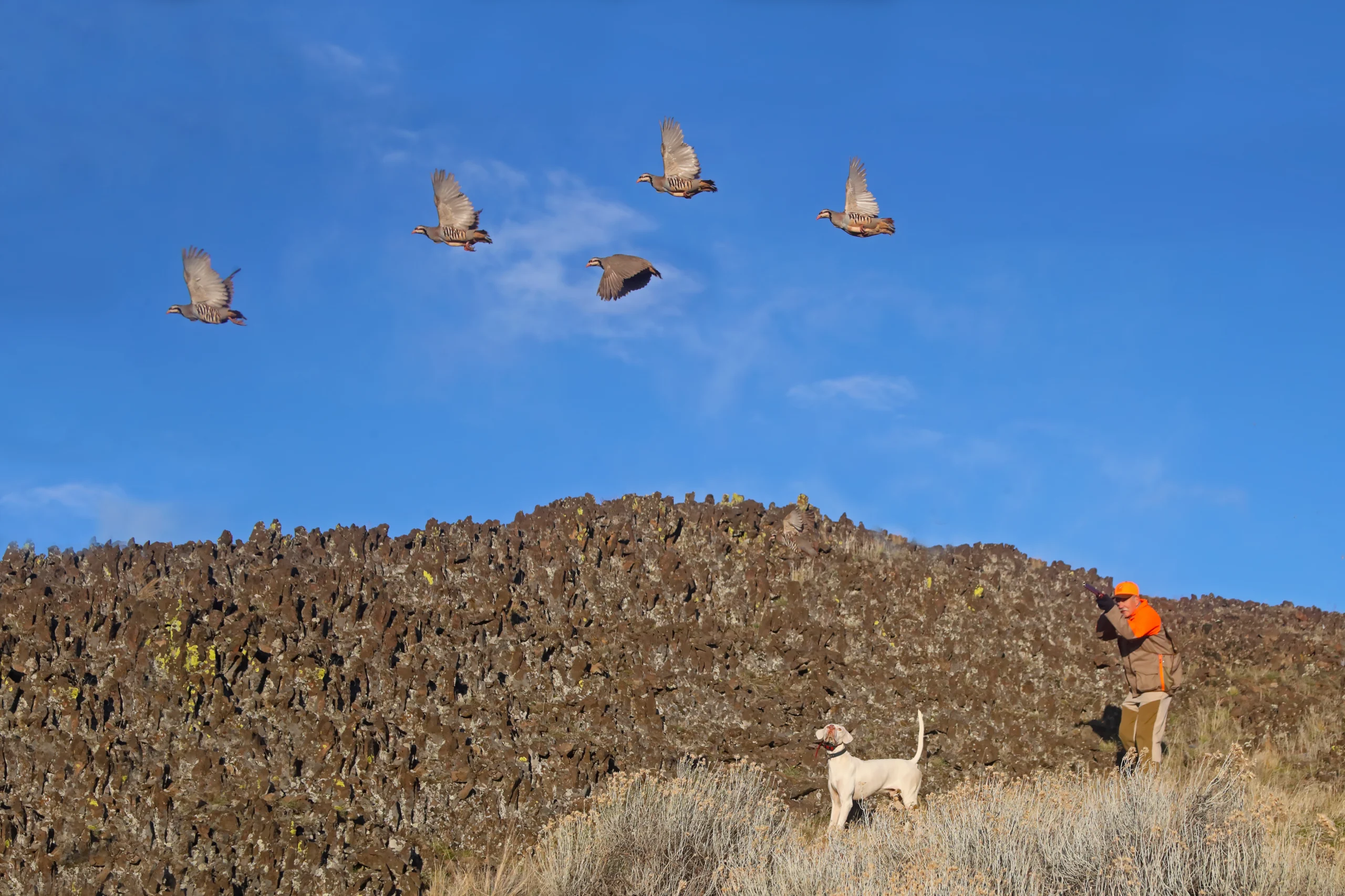
Warm-season-chukar behavior is different too. Many of the birds are young of the year and naïve to the ways of hunters and dogs. Even experienced adult chukar have relaxed their nerves a bit since the previous season. Expect these patient birds to run less and hold better, offering better shot opportunities. The phenomenon of the “popcorn flush” can be downright common when grass and brush cover are good. Reload quickly!
The third factor—and one that ties crucially to locating chukar—is how the birds deal with warm, dry conditions. The obvious part of this is water. When it’s dry, chukar need to utilize a water source, which usually means the three S’s: streams, springs and seeps. Streams are easy to locate. Springs and seeps are usually revealed by an abnormal presence of green vegetation amongst the tans and golds of autumn. Electronic tools like onX can be useful for scouting out water sources before heading afield.
Chukar typically feed in the early morning. By late morning they visit water, and if the water source is near suitable brush cover, the birds may remain nearby and commence dusting and preening. In the early afternoon they often repeat this routine, and their roost site may be the same midday dusting site. Or not. Chukar also like to roost in the “V” notches of washouts. If all of their needs are met in a small area, they may wander only 100 or 200 yards all day. Of course, disturbing them will alter this equation for a day or two.
Be aware that there are places in Wyoming, Utah and Nevada (and likely elsewhere) where chukar dig up root bulbs for moisture instead of visiting water sources. In such places look for patches of ground that show signs of digging, much like Mearns quail hunters do in Arizona and New Mexico. Not to be confused with dusting bowls, these sharper depressions range from golf-ball to softball size. If chukar tracks are visible and chukar droppings are still green, check again to make sure your gun is loaded!
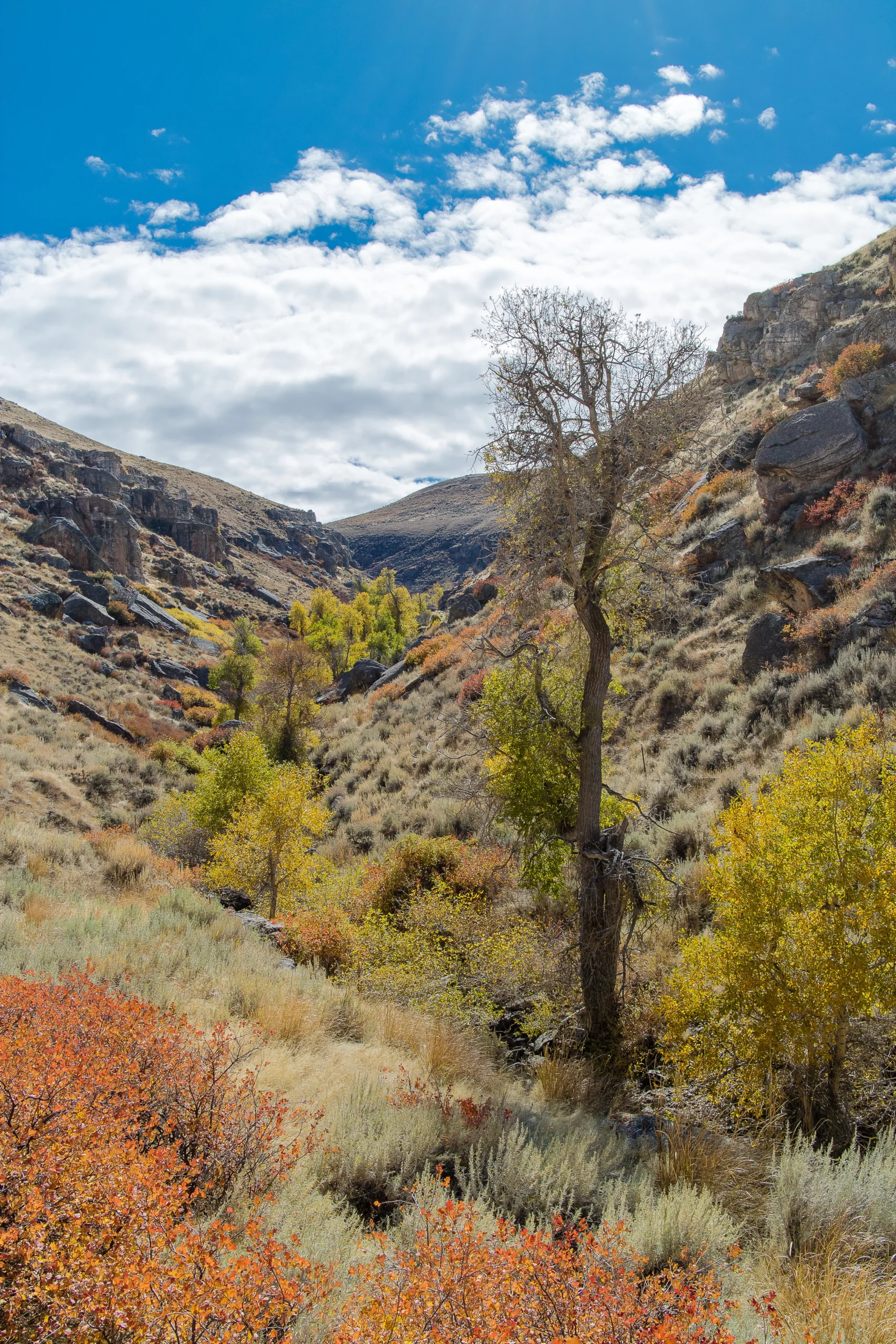
The moisture thing ties into hunting in one more way that is often overlooked. North-facing slopes stay cooler and more damp and contain green shoots of cheatgrass (and in some regions other suitable forage grasses) long after the sun has withered south-facing slopes to a crisp. I shoot the bulk of my early-season birds on the north-facing sides of ridges. The huge benefit to hunting north faces is that the slopes are usually fairly gradual compared to the south-facing places I hunt. This definitely helps offset the sweat equity of warm-weather hunting. Pockets of sage can be absolute gold in these locations. Not only do they provide much-needed shade for birds, but also the best grass shoots are usually found at the bases of sage plants where larger critters haven’t yet nibbled them off. Again, chukar often use these places for midday dusting and preening. If you find dusting bowls with signs of recent usage in these patches, search the area thoroughly. Chukar may be spending the bulk of their day there.
Later in the season as snow arrives, chukar will move to classic south-facing slopes where forage isn’t covered. During this transition period, they may remain near upper ridgelines to utilize snow patches for moisture. If winter brings higher snow amounts to both north- and south-facing slopes, birds will move down to the snowline. Their migrations are seldom lengthy.
There is often a lot of discussion about elevation. Its importance varies tremendously in different regions. For example, there are places in Nevada where I can find chukar at 5,500 feet and at nearly 11,000 feet on the same day. There are key factors that can help determine if all the birds are likely occupying a specific elevation zone. Geology can determine forage availability. Believe it or not, some soil types seem unsuitable for cheatgrass (or other chukar forage grasses). When you find birds, pay attention to what type of rock and/or soil is present, as it can prove a valuable link to locating similar spots. Geologic formations can also determine where springs and seeps will be. When chukar seem to be keyed in on certain foods or features, staying in a general elevation zone can produce more consistent results. In other regions where food, water and good cover are available both high and low, all bets are off.
When it comes to early-season gear, my choices differ from what I go with later on. The early season is the best time to opt for small-gauge guns and/or open chokes. A chukar really isn’t as big or as bulletproof as some people would have you believe. If you hit ’em, you git ’em. If you don’t, you won’t. For that matter, shoot the front half of the bird when offered the chance. What gives a chukar the reputation of being a tough customer is the same thing that gives a rooster pheasant that reputation: robust legs and a tendency to use them. The same advice holds for both species: If you hit one poorly and there’s still a shell in the gun, use it! The hot, dry air of the early season will make it harder for the dog to find a cripple.
I cleanly bag a tremendous amount of chukar with No. 8 lead shot and open chokes like Skeet and Improved Cylinder. These are 30-yard chokes, and No. 8s will mop up chukar at 30 yards all day. Later in the season when ranges typically reach 35 to 50 yards, I bump up to No. 7½ or 7 lead and at least Modified choke. Early on bismuth No. 7s are a good option, as are No. 7 or 6 steel.
Clothing should be light—both in weight and color—to deal with warm days. Boots should be lightweight and fit well while providing decent ankle support, arch protection and traction. I could wear snake chaps, but they are stiff, hot and make me work harder. My choice of bird bags is based on the ability to carry a lot of water and a decent amount of ammunition and to provide good airflow around my back, to prevent heat buildup. I quit wearing traditional vests, because they make me sweat more. With any bird-bag system, a stout waist-belt/support system is beneficial for carrying extra water weight on the hips rather than the shoulders. I have two bags I custom built for my needs. My favorite when weather is toasty is a large waist-pack system. Several manufacturers offer similar products. I find my waist pack is plenty big enough to do the job. In addition to my shells and gear, it often has carried five chukar and five Huns back to the truck.
One item that can greatly reduce the amount of water to be carried is a filtration system. I keep a Sawyer squeeze-pouch-style setup in my packs. It weighs practically nothing and requires minimal space. When hunting near known water sources, I can use this as needed, as long as I make the dogs stay out of the water until I fill the water pouch. Sediment clogs filters. (As an aside, during the early season I carry a tiny bottle of hydrogen peroxide in case my dog drinks water containing blue-green algae, which can be fatal. The peroxide will cause a dog to vomit instantly.)
Another ploy to reduce heat fatigue is to hunt with a friend and use two vehicles. Park one near where the hunt will conclude. After a few hours of hard work, having a shuttle to eliminate a hot walk back to the truck is nice. Of course, this assumes that a road is available where the hunt will end, which often isn’t the case.
On a similar note, park low and hunt up. There are many reasons for this. For one, chukar are easier to hit when they flush from uphill and fly overhead or down past the hunter rather than when they get a head start from below with gravity helping them bomb downhill. This way they will be getting closer as they fly past. It’s also best to get climbing done during the early, cooler hours, and then walk back downhill when things warm up. Doing the opposite is just plain punishment when you’re hot and tired.
Earlier I mentioned grouse hunting. That is one of the great joys of early-season bird hunting in the West: The chance to take a mixed bag is often excellent. Chukar live in the mountains, as do blue (dusky) and ruffed grouse. In some areas sage grouse live nearby. Huns sometimes share space with chukar as well. Where I hunt it is possible to start at daybreak at lower elevations and make a milk run upward as the day warms, finishing at timberline for blues. I’ve done it many times. Taking four or five upland species on the same day happens only once or twice each year, but it’s always fun to try. I also attempt to do this for friends visiting from out of state. Of course, there are days that I’m just plain tired and ready to call it quits by 10 AM . . . .
Whether I opt to go for the smorgasbord or specifically target chukar, the early season is a wondrous time. The mountains are wrapped in hues of gold, brown and gray. My feet stay fairly dry, and often the birds let me have a closer, more-personal experience on the covey rise. Early outings are also more “gentlemanly,” frequently finding me back on the tailgate early enough to enjoy a cup of coffee while listening to the calls of regrouping chukar. Yes, the little buggers can be pretty talkative at this time of year. And that’s another very good thing!
Read our Newsletter
Stay connected to the best of wingshooting & fine guns with additional free content, special offers and promotions.