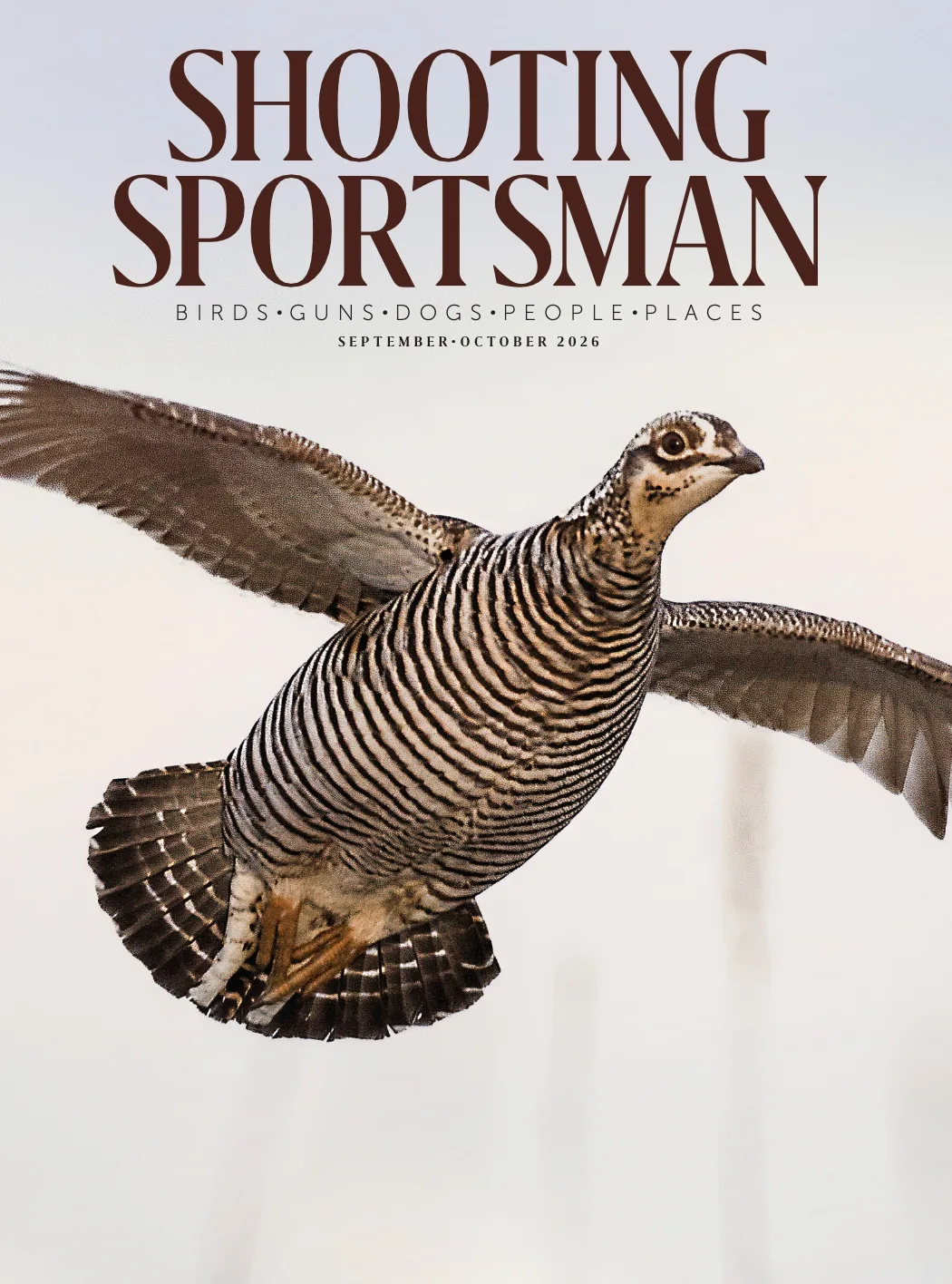
From our November/December 2026 issue
"Motherhood. That’s what really did it.” Liz nodded to emphasize the point.
A few years back, on my regular, annual perambulation through Western Art Week, in Great Falls, Montana, a booth filled with amazing bronze sculptures—bird dogs and gamebirds, horses and trout—reached out as I passed by and yanked me inside. For eyes that look all day every day at my own mixed herd of bird dogs, through camera lenses or at display screens filled with upland scenes and Western gamebirds, the gravitational pull of that booth was irresistible. And there, in the midst of metallic forms and patina, was the sculptor: Liz Lewis. I pulled up a chair, sat and perhaps 20 years of pent-up conversation since our last meeting flowed—dogs, hunting, life, art, shooting and all the interstices between. Next thing I knew, the art show was closing for the night.
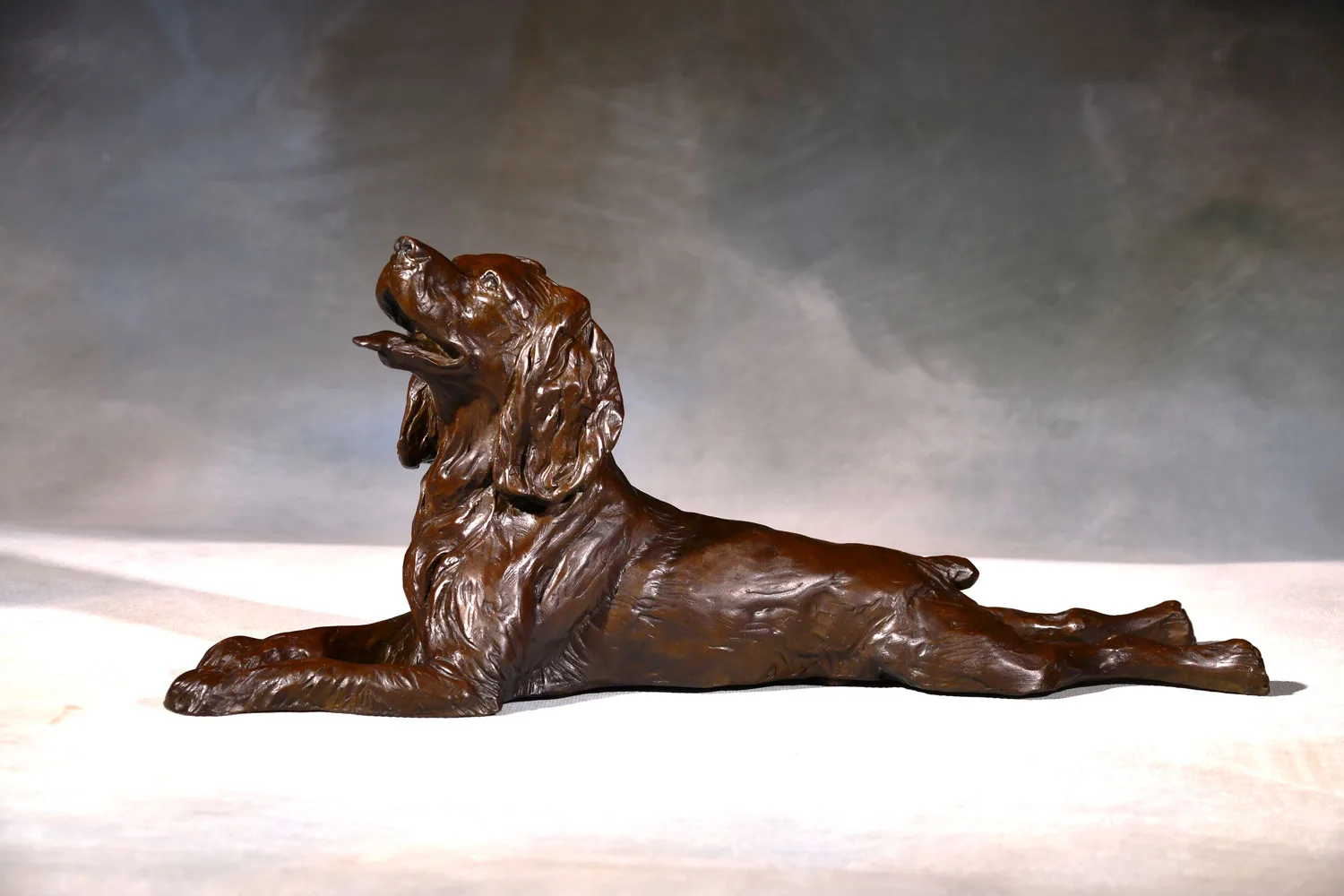
Photo by Liz Lewis
Three decades earlier, Liz had materialized at a gundog event near Bozeman. It was my first encounter with the then sporting artist to be. The buzz in local upland hunting and shooting circles had preceded the appearance: a Beretta- and Fiocchi-sponsored clays shooter, the first female on the junior NSCA US Sporting Clays team. In those days Liz was another kind of shooter as well: She was the one rolling with a camera, not me—a young person’s early exploratory step toward merging outdoor lifestyle with innate creative calling. I had an accomplished field-trial dog with a recent national title. Photos were taken: Spike holding a rooster pheasant with a creek and cattails in the background. Weeks later, a large print arrived—not to date the two of us, but film photography still had more years to run—and that framed print hung on a wall in my home until UV window light leached most of the colors from the paper.
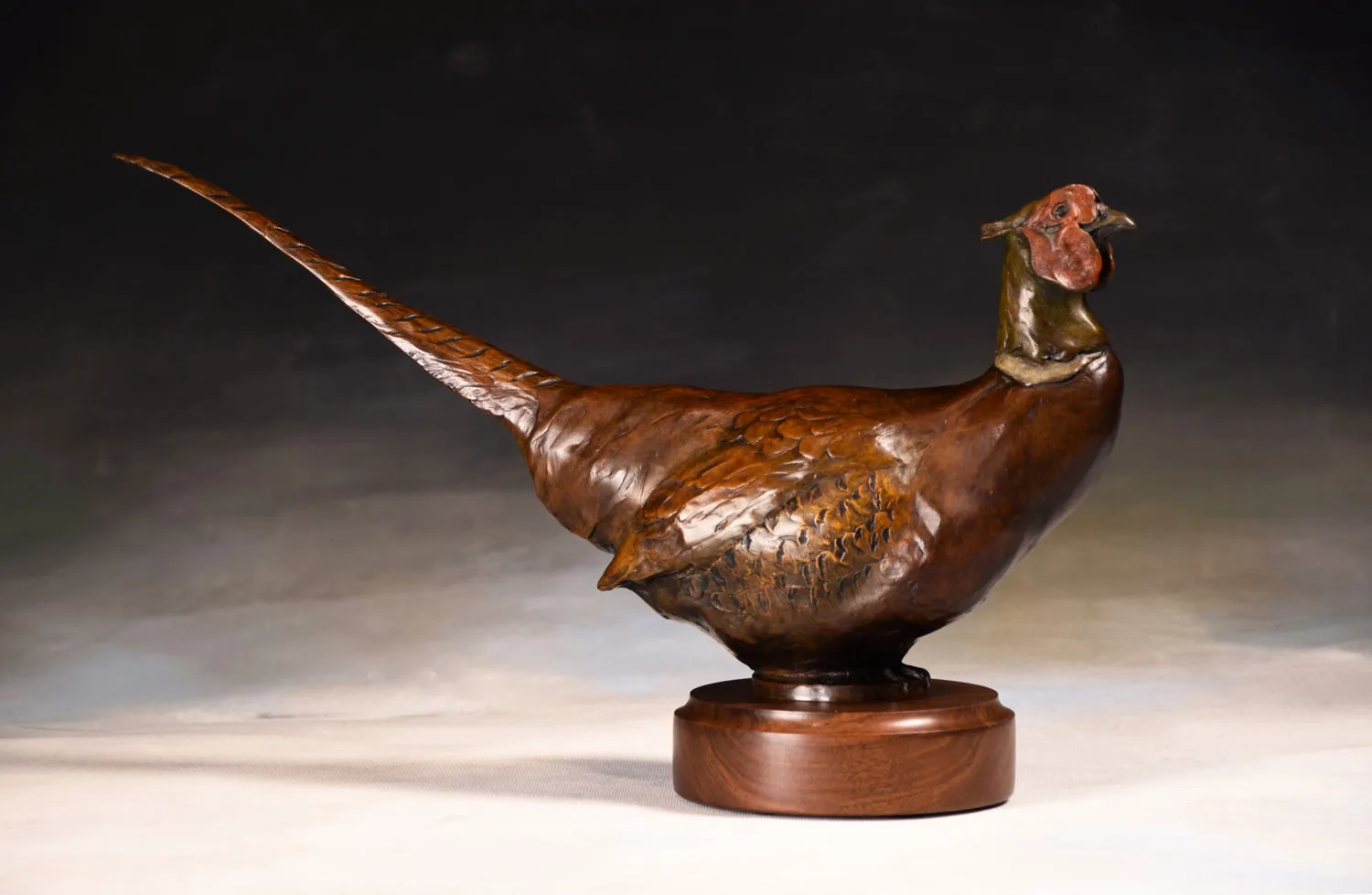
Photo by Liz Lewis
Since the Great Falls art show, Liz and I have bumped into each other once or twice a year, each rendezvous marked by a gabfest. Brief conversations are evidently not our genre. As with every artist, guide and trainer I bounce off in the sporting world, I want to hear about the journey. There’s a continuum among folks who find an avocation and a lifestyle utterly compelling, and along that spectrum people fall into different categories. Some throw caution to the wind, jump in and try to figure out how to merge vocation with avocation. Others compartmentalize, keeping their avocation and vocation separate. The latter is on average far and away the smart move—despite romanticized, sanitized notions in old-school sporting publications. All the available slots in the bird dog world, guiding, training and even various forms of art have gritty downsides. Days and road miles are long; clients and employers can be fickle if not outright difficult; there are substantial barriers to entry and capital costs; and adequate remuneration is generally a grinding struggle, especially in the early years. Mixing avocation and vocation for most can be a perilous undertaking—for livelihoods, for marriages, for life trajectories. But some who go down that road gain traction and pull it off.
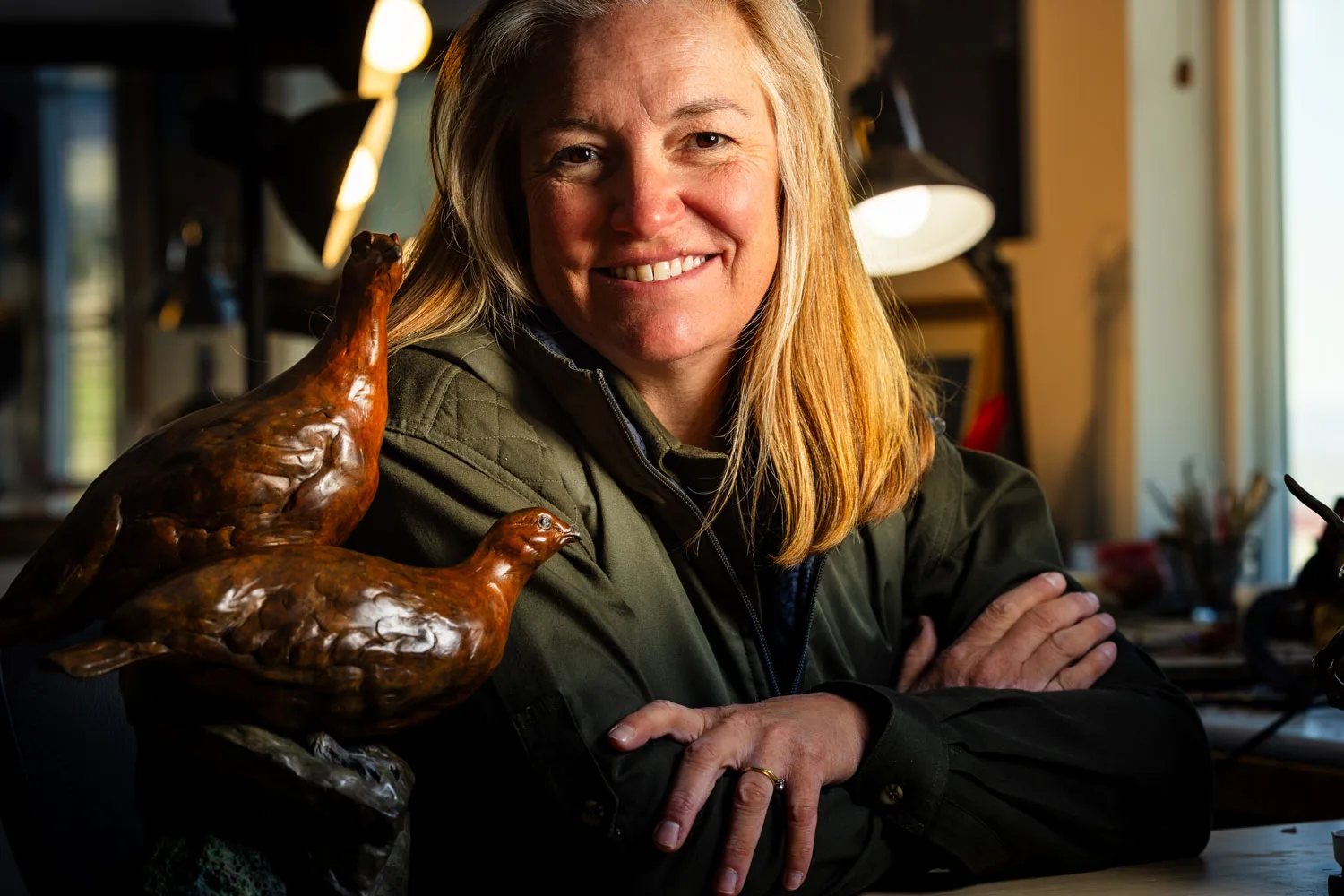
Photo by Liz Lewis
I’m sitting in Liz’s studio near Bozeman—an outbuilding she and husband Jimmy added across the driveway from the house. The early-morning cool was brief and has passed; the AC is rare in Montana and appreciated. Speaking of barriers to entry, capital costs and “pulling it off,” the spacious studio itself is a testament to sustained artistic success.
“So, Liz, what was the path? How did you go from that day—a young clays shooter taking photos of my dog—to bronze sculpture and successful artist?”
That’s when she blamed motherhood.
“I was an only child, raised at the shooting range. Dad was a match shooter, into black powder, my parents did rendezvous. To keep kids occupied while adults did their thing, we were handed bricks of .22s and sent off to do our own shooting. By 10 I was shooting trap and skeet.”
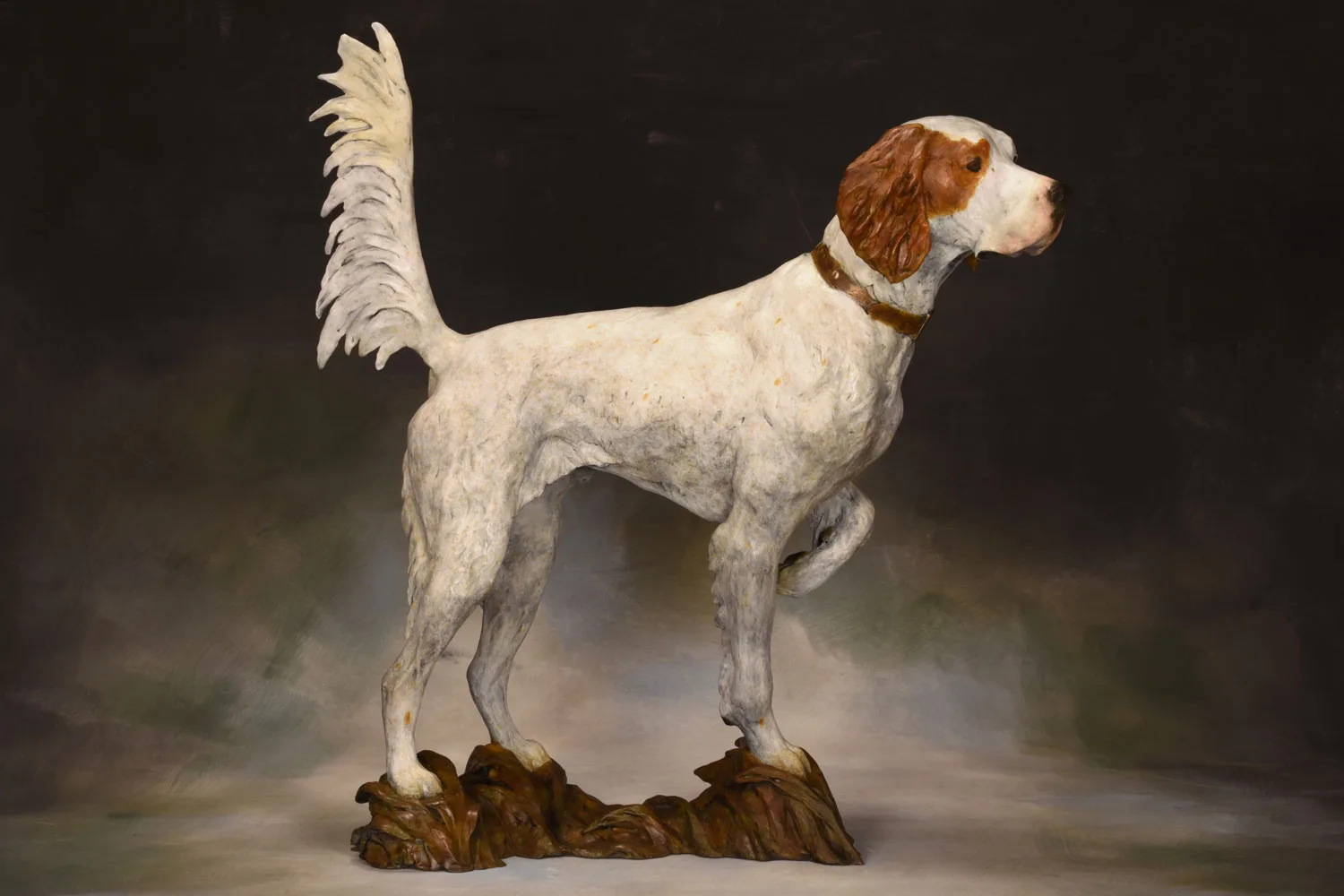
Photo by Liz Lewis
Then came sporting clays and eventually a driver’s license, and the odometer on her aged Oldsmobile was spinning every weekend en route to another shoot. The outdoor sporting version of Cupid brought Liz—from Wisconsin—and Jimmy—from Maryland—together for the first time in a small northern Illinois fly shop, as Jimmy was westbound for Montana. Cue a few years of long-distance romance before Liz transferred from the University of Wisconsin–Stevens Point to join Jimmy at Montana State, in Bozeman. They married after junior year, and Liz finished a biology degree in ’98.
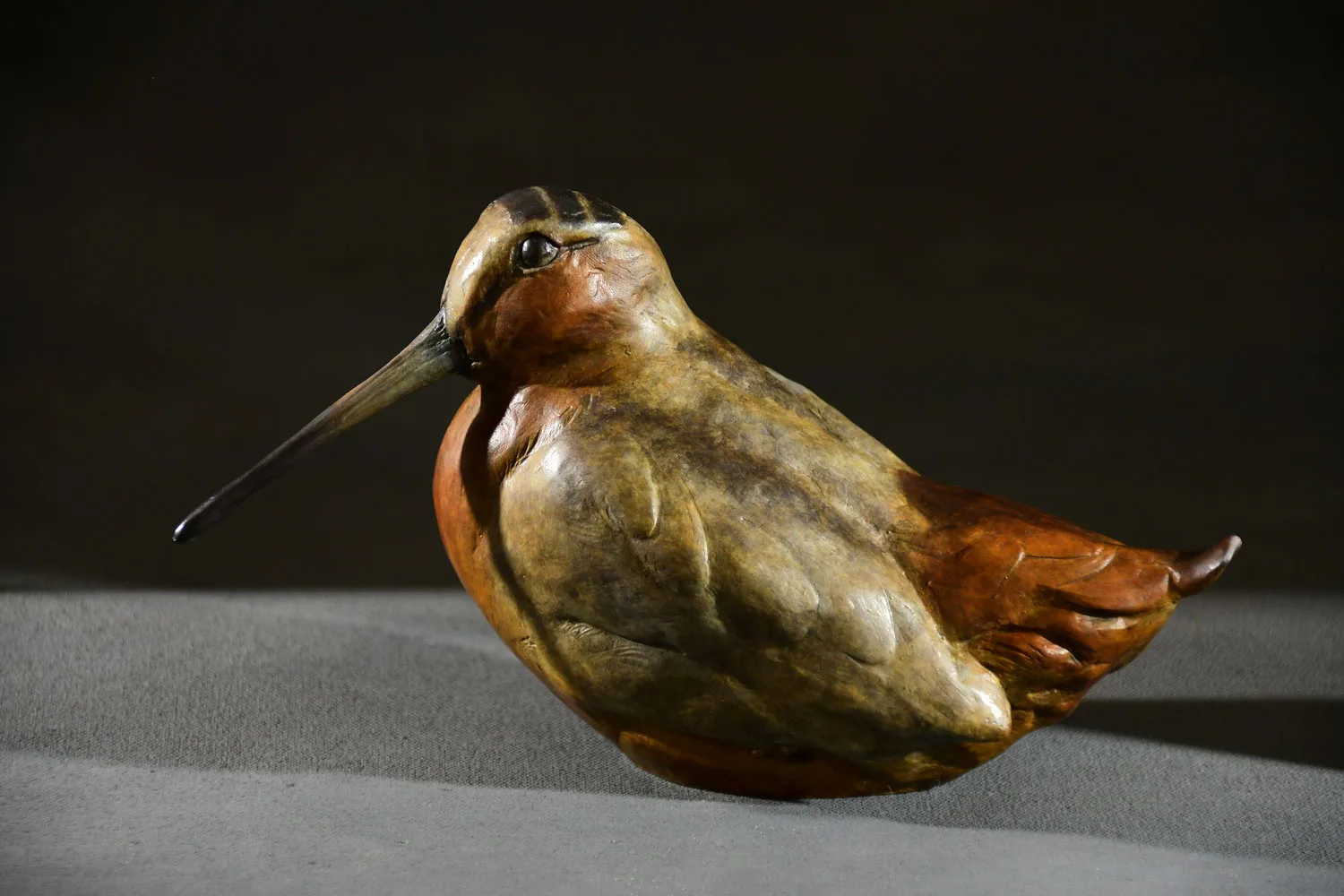
Photo by Liz Lewis
“I was doing retail and guiding fishing; Jimmy was guiding wingshooting clients. We were getting 120 guiding days in the field every year plus whatever we were doing on our own time. Then we had a baby. The cost of childcare was so high it didn’t make sense to farm out my daughter to someone else.”
So she was “stuck”—her word—at home with infant Hayden.
“I had to do something, or I was going to go crazy. A guide friend gave me a chunk of clay and urged me to do something with it. That clay became a displaying sharptail. I had it cast—casting in this area was easier then; there were a couple of foundry options. Next, I wanted to get my expenses out of it.”
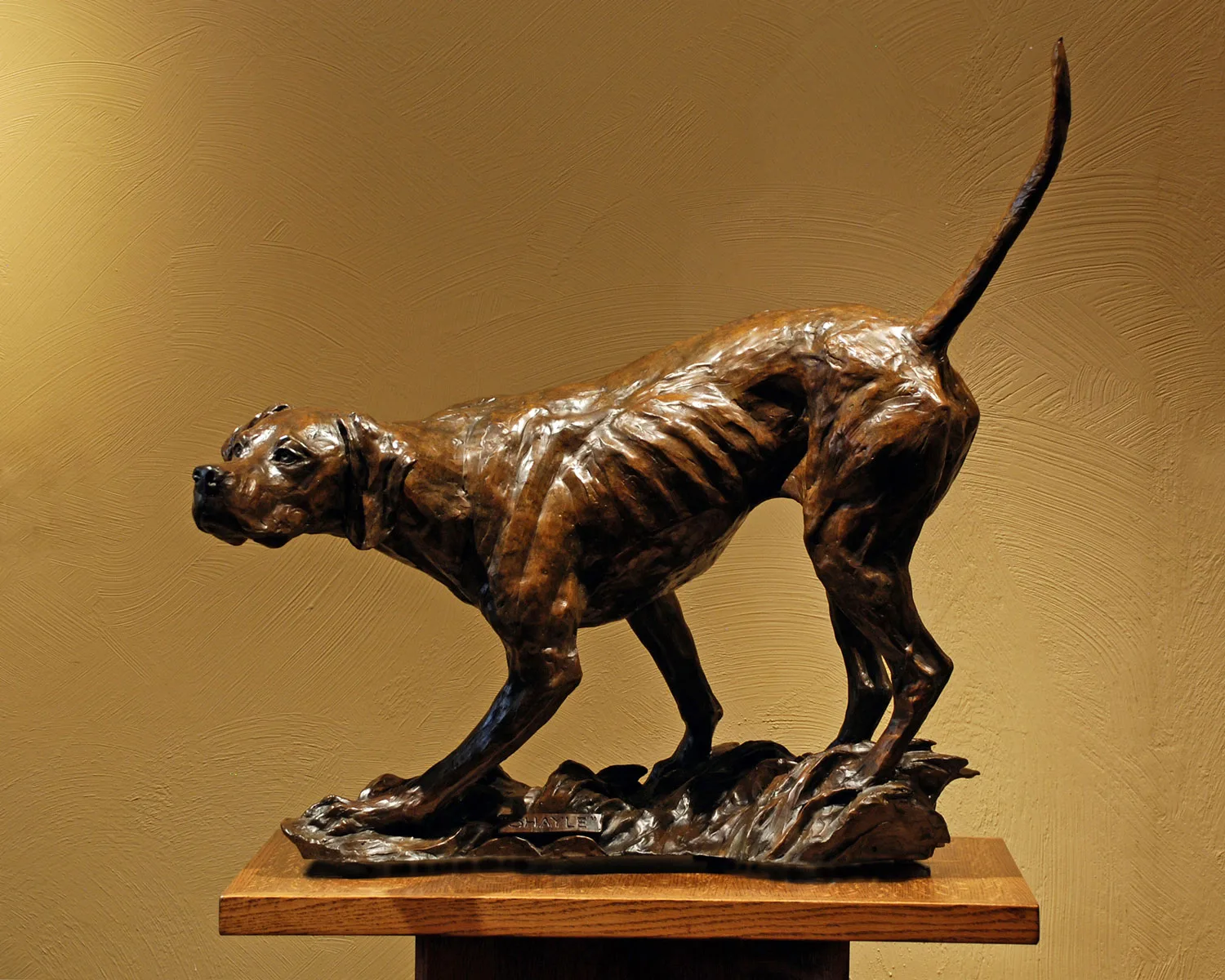
Photo by Liz Lewis
She took the grouse to a downtown Bozeman gallery. The owner agreed to consign it. In short order, the sculpture sold and the gallery wanted more. A career was launched; a whole lot of work lay ahead.
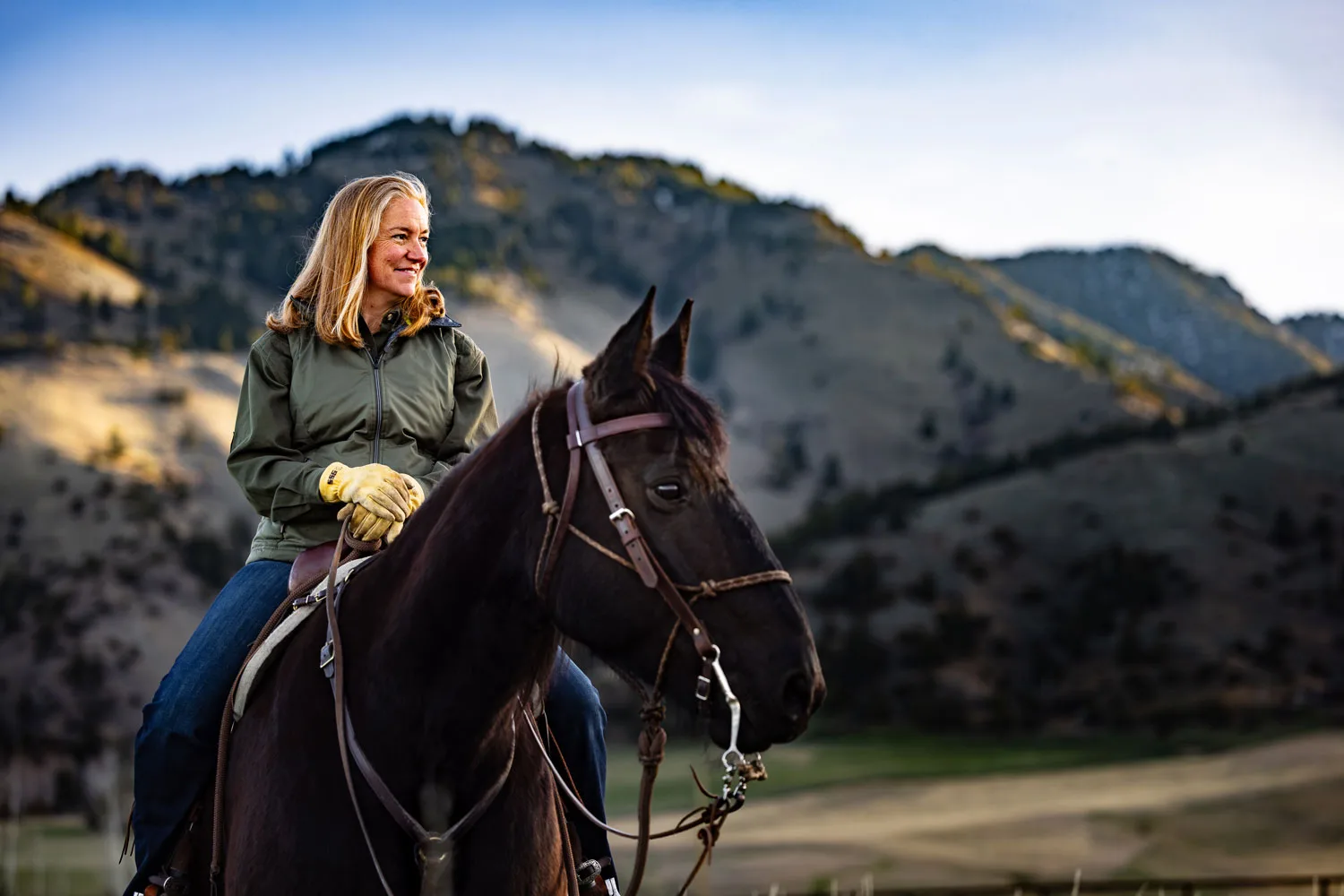
Around the studio, there are hood vents and face shields, grinders and torches. Finished bronze pieces line a shelf, and on the counter, the latest project: a bugling bull elk emerging from clay. Outside, eight dogs fill the kennel, most are pointers. In a corral, horse tails swish lazily. Liz is among the very small group of upland hunters I know, apart from the horseback field-trial crowd, who hunt on horseback. We talk about an older bird-dogger we’ve both known for many years, how he’s doing, and she picks my mind on GSPs. “That might be my next dog,” she muses.
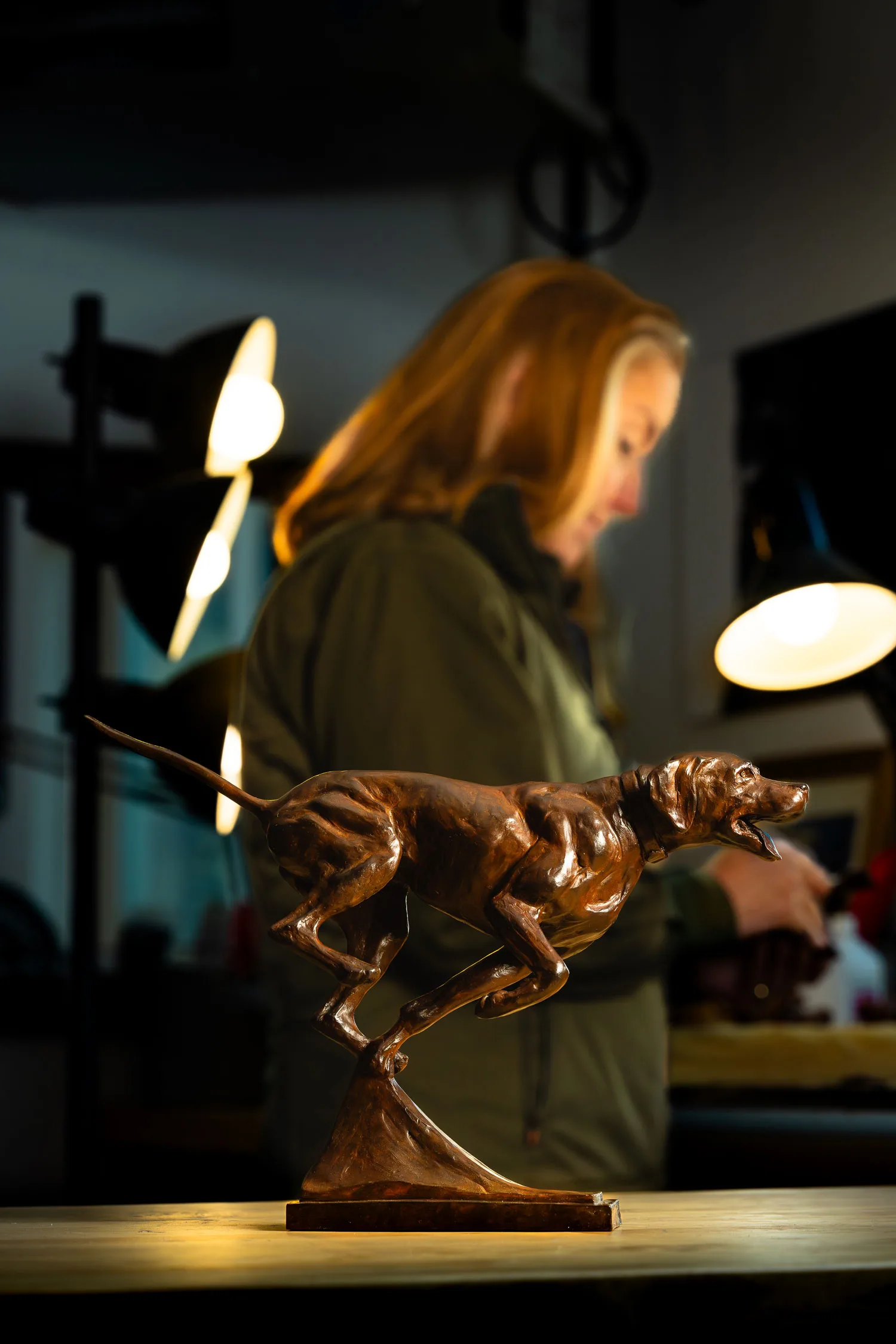
Photo by Liz Lewis
Clay media is the first tangible step toward the finished bronze, followed by what strikes me as a technical, tedious, repetitive process of molds and models from different materials: clay, wax, rubber, silica. The purpose of the stepwise process is to get from a substance the artist can work with—clay—to a mold that holds all the detail from the original clay and that can withstand a molten metal pour at 2000°. I am beginning to grasp why bronze sculpture is not inexpensive.
“Foundries are the bane of the sculptor’s existence,” Liz observes. “Quality control is always an issue. But sculpting is a team sport. It used to be easier, when there were a couple reliable, full-service foundries in the area. The pandemic and divorces took a toll. I’ve had to teach myself to do more and more in-house. I won’t pour 2000° metal, but I can do almost everything else. And when one of the foundries closed, I grabbed the patineur.”
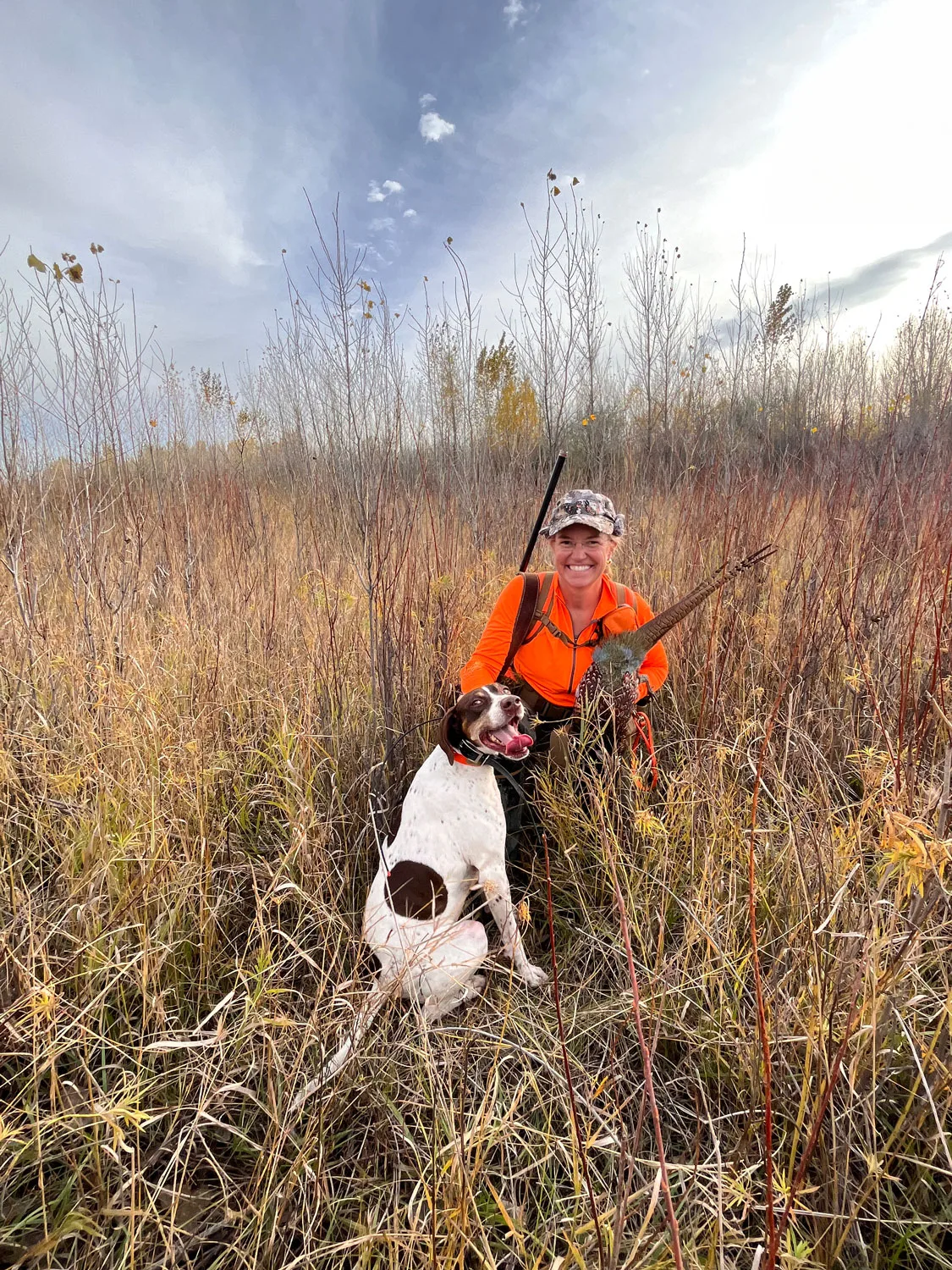
Photo by Liz Lewis
The patineur applies the patina—the exterior coat on the sculpture—and that is an arcane art in itself. Different elements add varying tints and hues. Sometimes a creator wants a consistent look for the brand; sometimes artistic intent wants something that stands out. Iron adds red; copper is green. Patina is the last of the laborious, mechanical steps involved in producing a bronze. I think of Liz’s background as a competitive shooter. At least 75 percent of successful clays shooting, maybe more, is mechanical. It’s how you stand, where you position the gun, where you look for the bird, deciding in advance where you will break the target. It is a very structured, disciplined process that at the highest competitive levels requires laborious repetition to hone muscle memory and mental consistency. Maybe the mind that is capable of shooting structure at that level is pre-adapted to a structured artistic process too. And production isn’t the only structured job requirement. It’s backdating the creative process so that today’s clay model can debut six months from now as new work at a major exposition. It’s managing logistics, crating and shipping a few dozen pieces along with infrastructure across the country in advance of events. The non-linear side of my brain starts spinning when Liz details the logistical juggling act and the FedEx gymnastics.
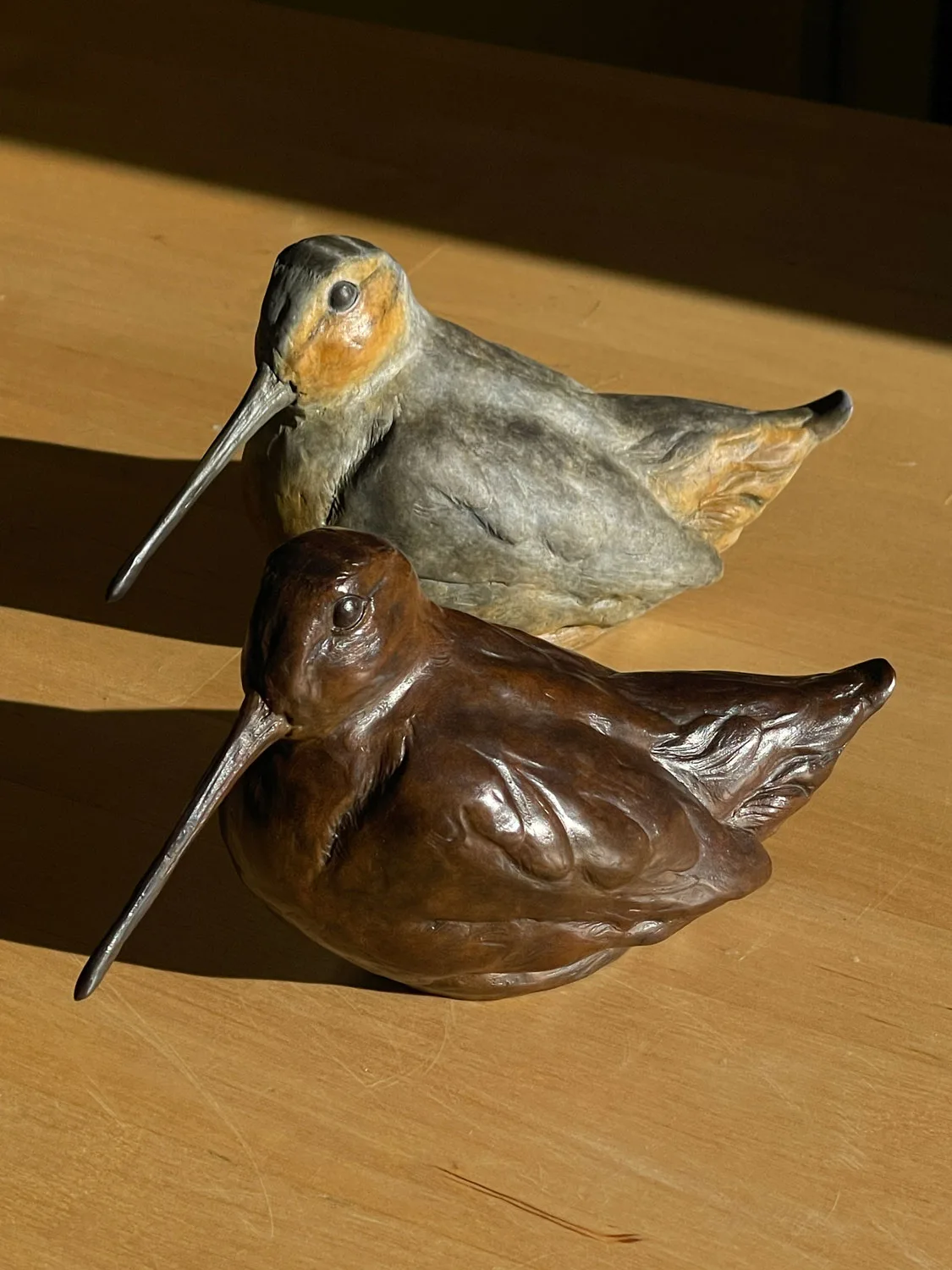
Photo by Liz Lewis
“My stepmom was a sporting-book dealer,” Liz said. “She had me going to Safari Club events at a young age. It was good training for selling sporting art. She knew everyone—that’s how Holland & Holland became an early outlet for my work. Galleries and arts shows were calling, and once Hayden started school, I had more time.”
A few decades later, commissions rather than galleries and shows represent the majority of her work. For any artist, that’s a giant stamp of popular approval and commercial success. It’s a big step up from trekking on a spec basis across the country to an art show, hoping enough work sells to cover costs and make a profit.
At the moment, the coming upland season looms only a month away. We talk about upland options in our very large state—west versus east, mountains versus prairies. I ask about the inherent conflict between work demands and getting out with dogs and shotguns, pursuing the passion that brought the art in the first place. For one thing, one of her sporting-art shows, the Wildlife Arts Festival, is in November—inconveniently during peak hunting season—in Thomasville, Georgia. Her biggest show of the year, the Southeastern Wildlife Exposition, in Charleston, South Carolina, in February, closely follows the Montana upland season, so preparation inevitably encroaches. Liz mentions “high-grading” her sporting experiences, trying to at least hit a few high points. While the years with well more than 100 days in the field and on the rivers aren’t coming back anytime soon, the inspiration that comes from time afield is still important. A locked-up pointer and the anticipation of the rise still tug at the heart.
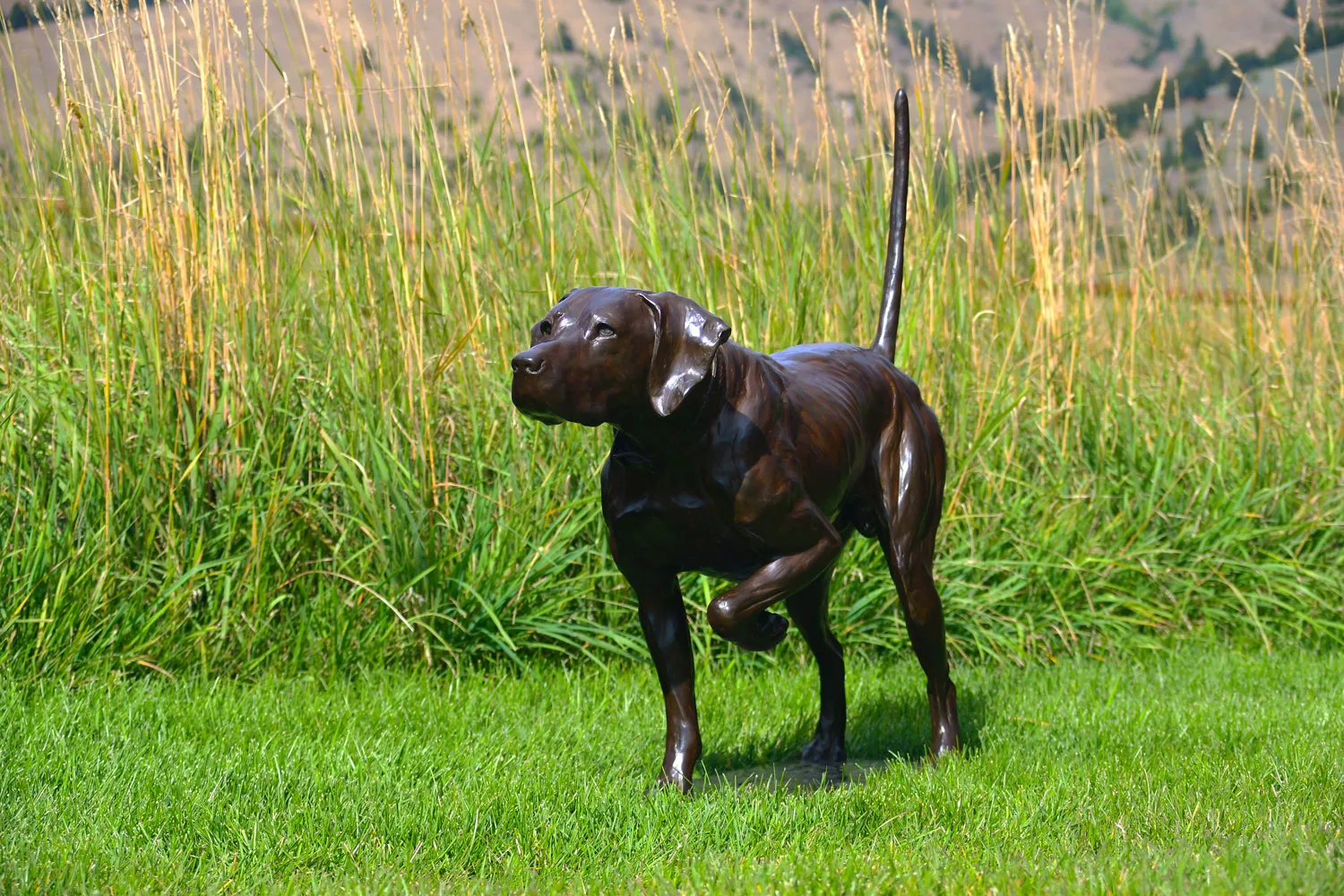
Photo by Liz Lewis
“I did way too many shows last fall. I need to get out more,” she admits. Gears shift, and the back and forth underscores my query. “Now that I’ve been DIYing my own foundry work, I understand more of what is possible. I understand the engineering; I can push limits.” She points to a complicated piece: a cowgirl in a stream, fishing. “That’s new. I did that for me, just to see if I could. And it worked, and it’s been wildly popular. I’ve set a goal: to do one out of every three new works just for me.” And in the next breath, there’s more talk about hunting, with a friend whom she really enjoys, and then maybe mountain grouse with Jimmy, on horseback. Another new endeavor: Liz and Hayden—remember motherhood? Hayden is now all grown up and a young adult—the two have been teaching Jimmy to sit a horse. Perhaps soon there will be a third horseback upland hunter in the Lewis family. And I can tell we’re going to need a follow-up gabfest in January, just to see how another season of the never-ending tug o’ war between the art and its autumn muse settled out.
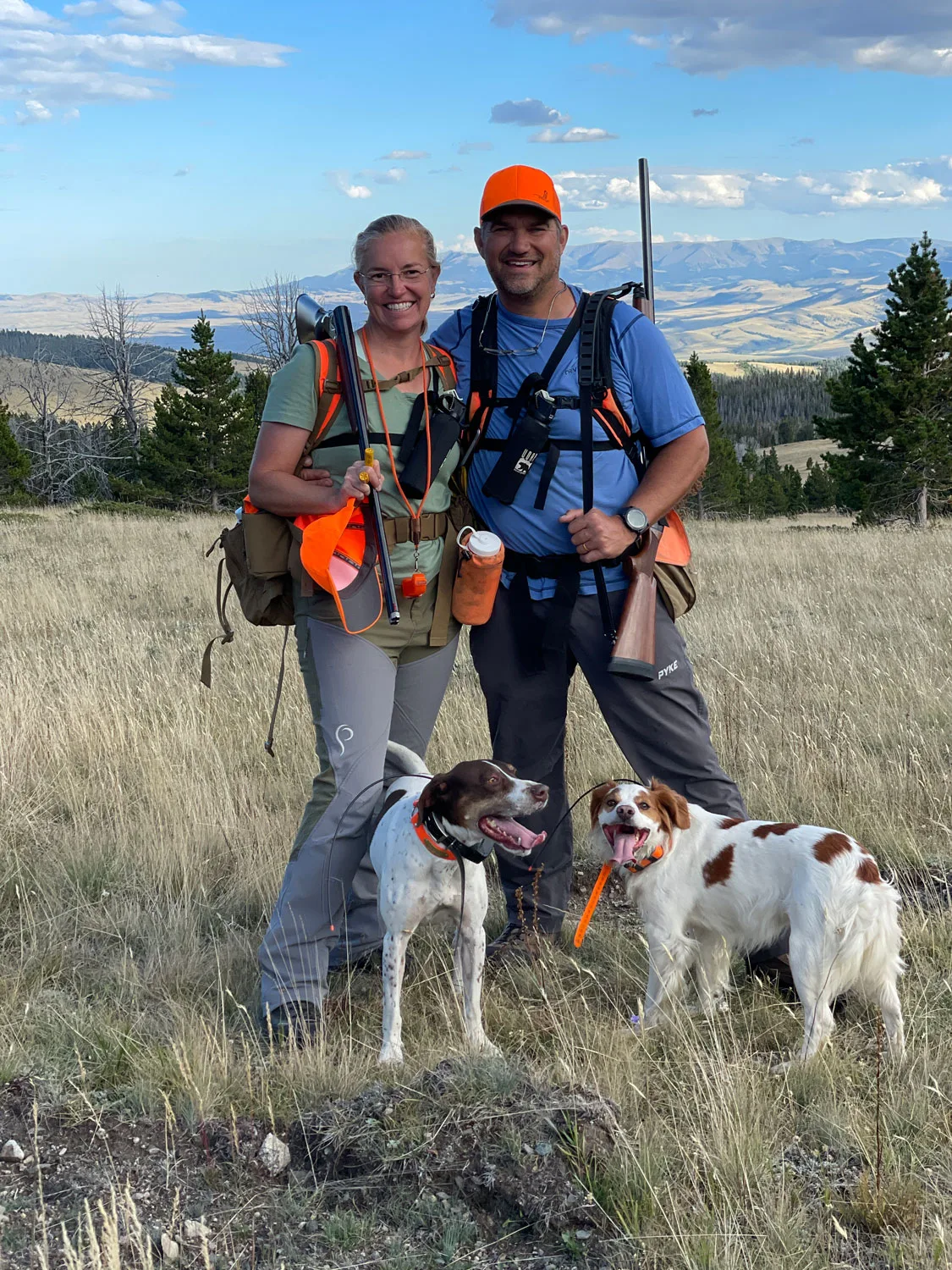
Photo by Liz Lewis
For more information, visit lizlewismt.com; @lizlewisbronze.
Read our Newsletter
Stay connected to the best of wingshooting & fine guns with additional free content, special offers and promotions.