From our November/December 2026 issue
The ice on the pond was just right for breaking: thin enough to crack easily, thick enough not to shatter like glass. It came apart in big sheets that I could slide under the standing ice, leaving clean, open water behind. It took an hour to make a reasonably sized hole. Then I crowded sleeper shells at the edge and set a half-dozen floaters. I stuck silhouettes into the stubble on shore and tucked a layout blind into the weeds.
As it grew light, I discovered that the other half of the pond had opened on its own overnight. I could have seen this in my headlights, had it occurred to me to sweep them over the surface when I’d arrived. So there had been no reason to spend an hour in cold water, sliding sheets of ice with numb fingers. A couple hundred geese sat in the open half. Once aware of my presence, they left noisily. Besides kicking myself, what could I do? I lay under frigid, empty skies hoping they would return. They did not.
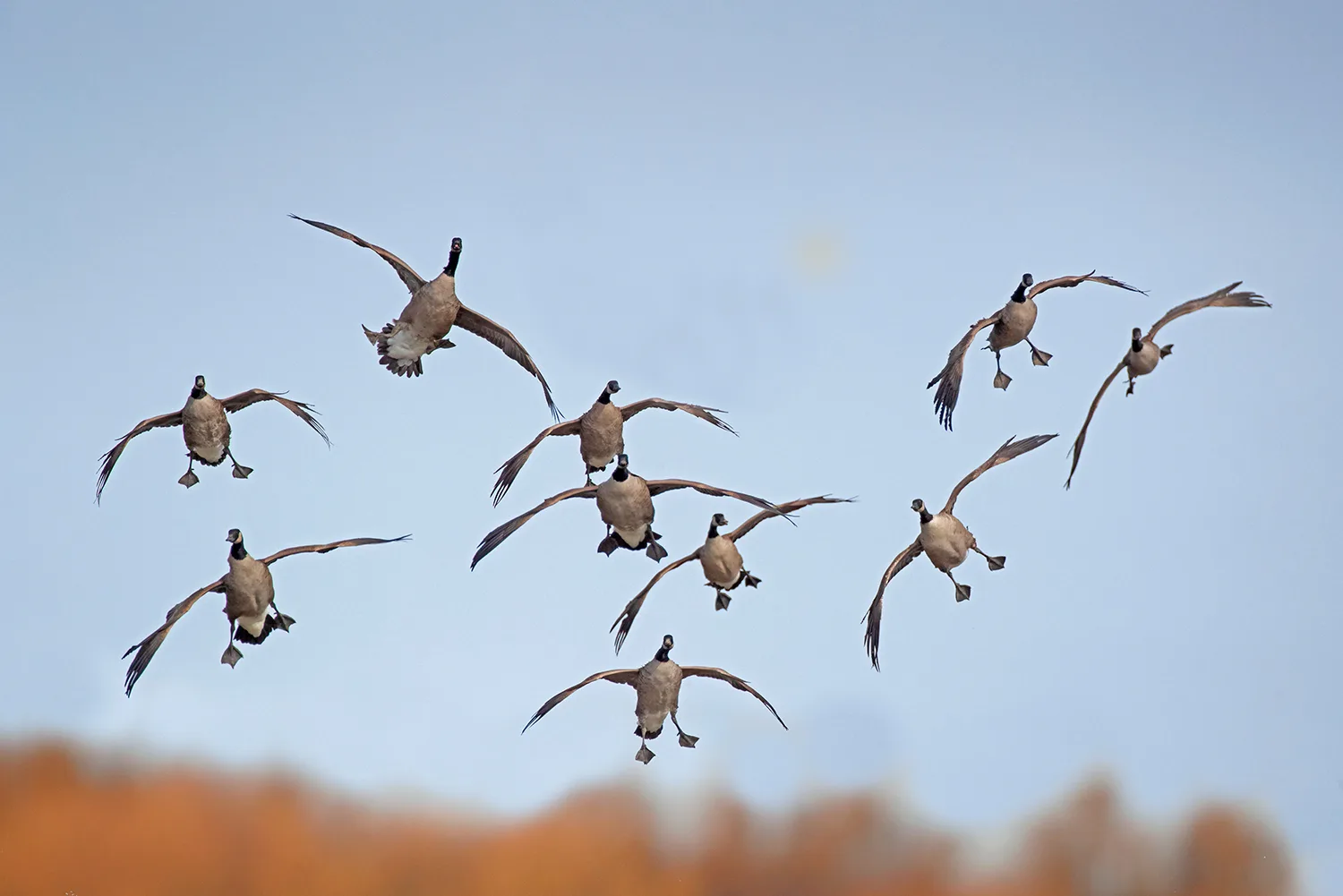
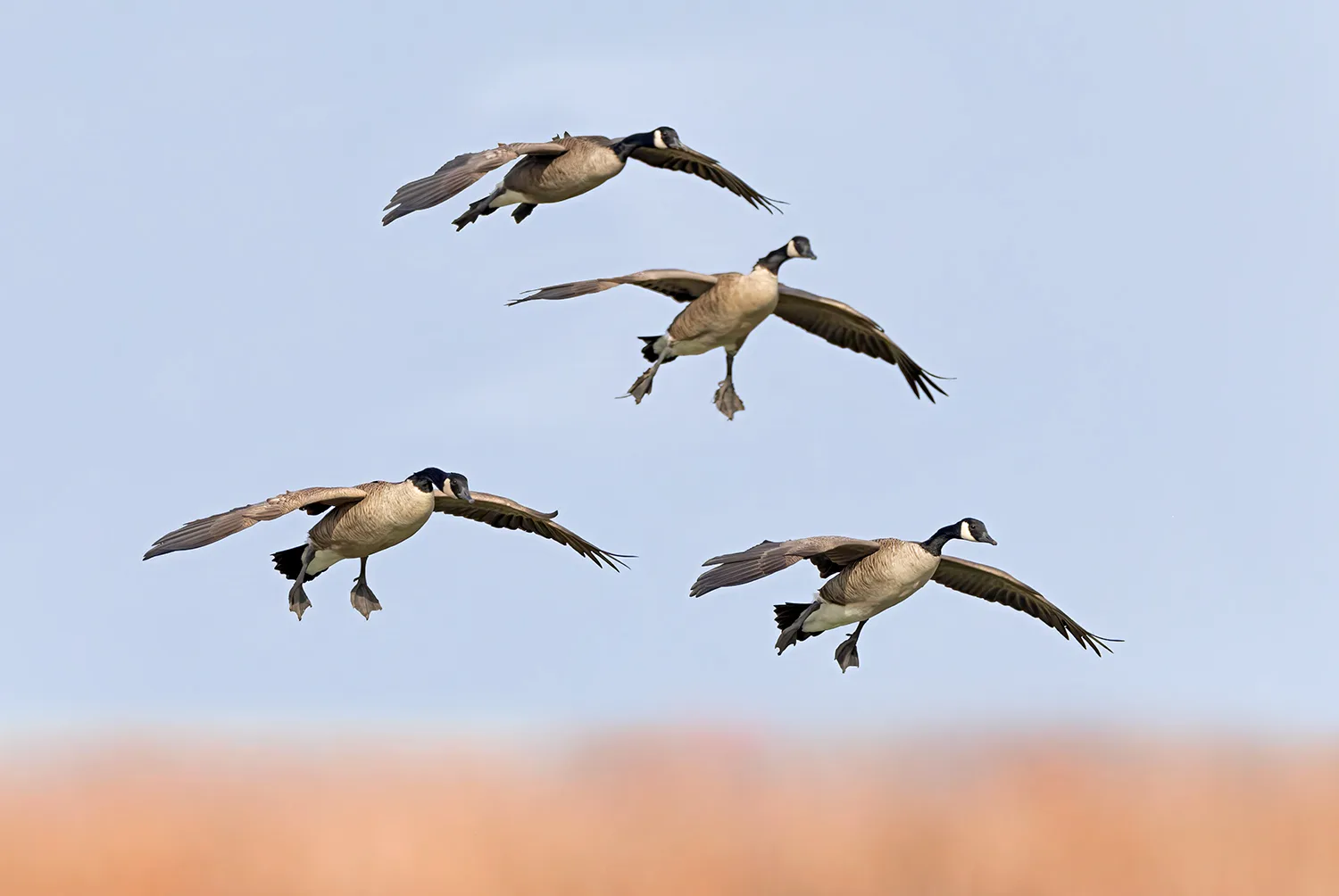
At mid-morning three tiny dots fell out of the stratosphere. I watched wide-eyed as they grew bigger and bigger until three Canadas hung in the air at 10 yards. Conveniently, three dark geese constitute an Iowa limit late in the season. I picked one, sat up and the hood of my parka flopped over my eyes. In the moment, I did not think clearly. Instead my inner voice said: No problem. I’m on this goose; I’ll shoot it blindfolded, Jedi-style. After the first shot, I pulled the hood back to reveal all three geese unscathed and wheeling away. Two panicked follow-up shots sailed one. What should have been an easy triple turned into an awkward chase across the cornstalks until I stumbled close enough to launch a finishing shot. Good fortune had taken pity on me and dropped a limit of geese into my lap. I’d made a hash out of it. On the plus side, there were no witnesses. And you wonder why I hunt Canada geese alone . . . .
Hunting alone means I get to be in charge of my crew of one, making all the decisions. I like shooting when I want to shoot. When I am successful, it’s because I did more right than I did wrong, on my own. Going solo even has a few advantages over gang hunting—at least when we’re talking about Canadas and specklebellies. Snow goose hunting is a team sport and a numbers game. Watch enough YouTube videos, though, and you would think the only way anyone hunts any kind of geese anymore is by crowding together in an A-frame blind with a dozen or so of your best friends. A big crew beats solo hunters when it comes to sharing the work of setting and picking up spreads and of scouting.
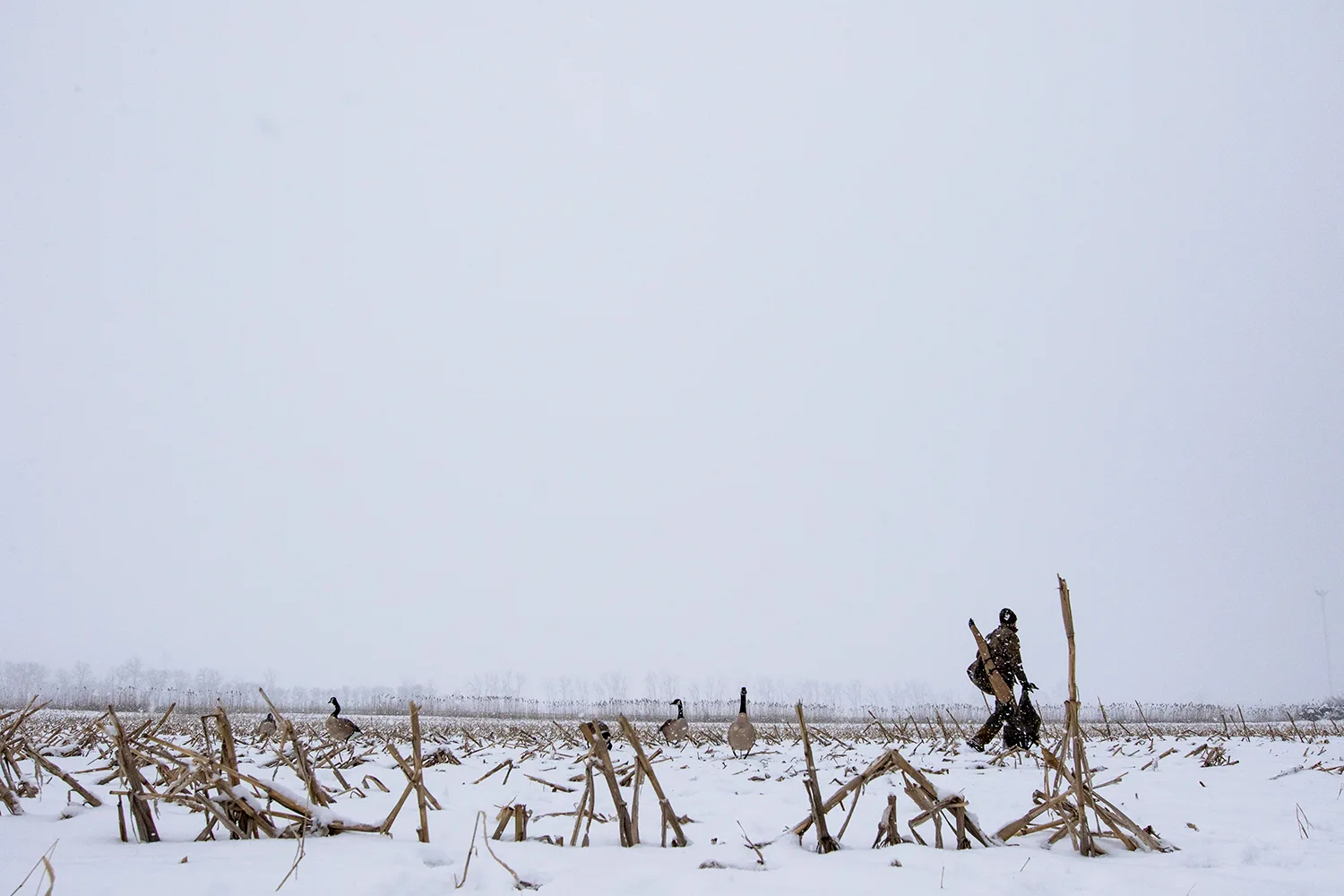
Scouting is the hardest part of hunting geese by yourself. If you’re part of a group of, say, eight people who hunt together, you have eight times as many eyes on the sky as one person does. You can run in eight different directions, talk to eight times as many people and have eight times as many chances that somebody knows somebody who owns the hot field. All I can do is cover what ground I can looking for birds. If I had any advice for the solo hunter, it would be to take good care of your landowners. A texted picture of geese in a field along with a message like “Can you come hunt?” saves a lot of legwork.
A big advantage to solo hunting is that once you find geese, you don’t have to match up everybody’s schedules to see when you can hunt. That matters. Feeding geese are a moving target. If they are in a field one day, they may or may not be there the next. If they’re in there two days in a row, odds are high they will be there on Day Three. After that, maybe. Sometimes they stay and their numbers build. Or they might eat all the grain in the field and go somewhere else. You can watch a field, counting the days until the weekend when everyone can hunt, and the geese leave on Friday. It’s frustrating. As a solo hunter with a forgiving schedule, I don’t have to put up with it.
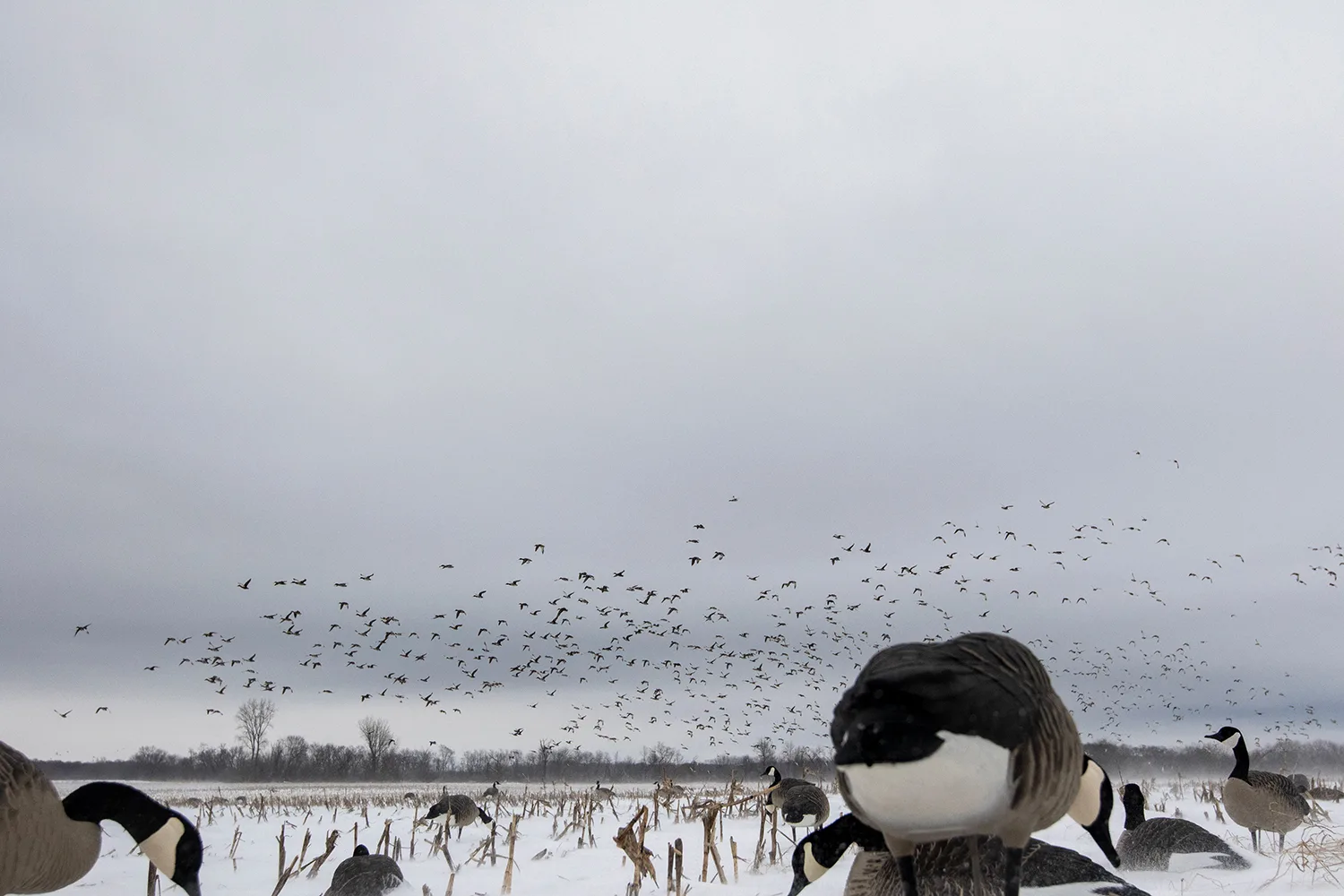
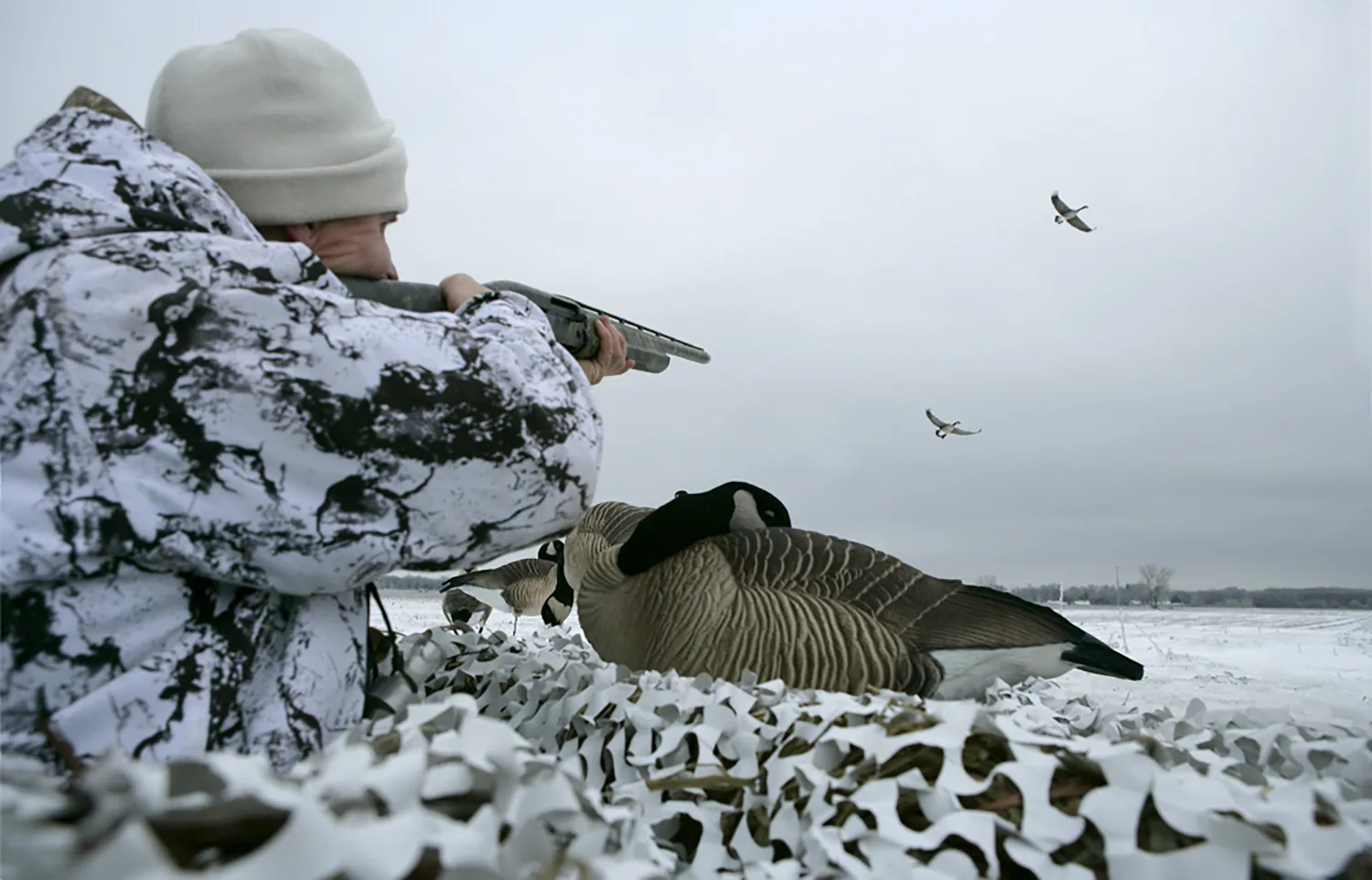
Finding geese is the most important part of any goose hunt. Hiding runs a close second. One hunter can often hide where many cannot. I once shot a limit of birds from a clump of grass growing around the wheels of a center-pivot irrigator. Layout blinds remain the best solution for concealing a single hunter. Also, they are quick and easy to set up and take down. With all goose hunting gear, I operate on the simple, pessimistic principle that guides my solo hunts: Everything I set up is something I have to put away, in the cold, in the dark, often after getting skunked, by myself. I have an accumulation of blinds and am especially fond of the way the Avery Finisher breaks down. The Final Approach X-Land’R is a bit more spartan, but it is low-profile, hides beautifully and folds up in seconds.
My operating principle holds for decoys too. Every plastic goose I put out is one I will have to pick up. The good news is that solo hunters don’t need as many decoys, because part of the function of a decoy spread is to draw eyes off the hunters or to help hide the blinds. I have only one hunter to hide. If I am setting up where the geese want to be, I can get away with a small decoy spread.
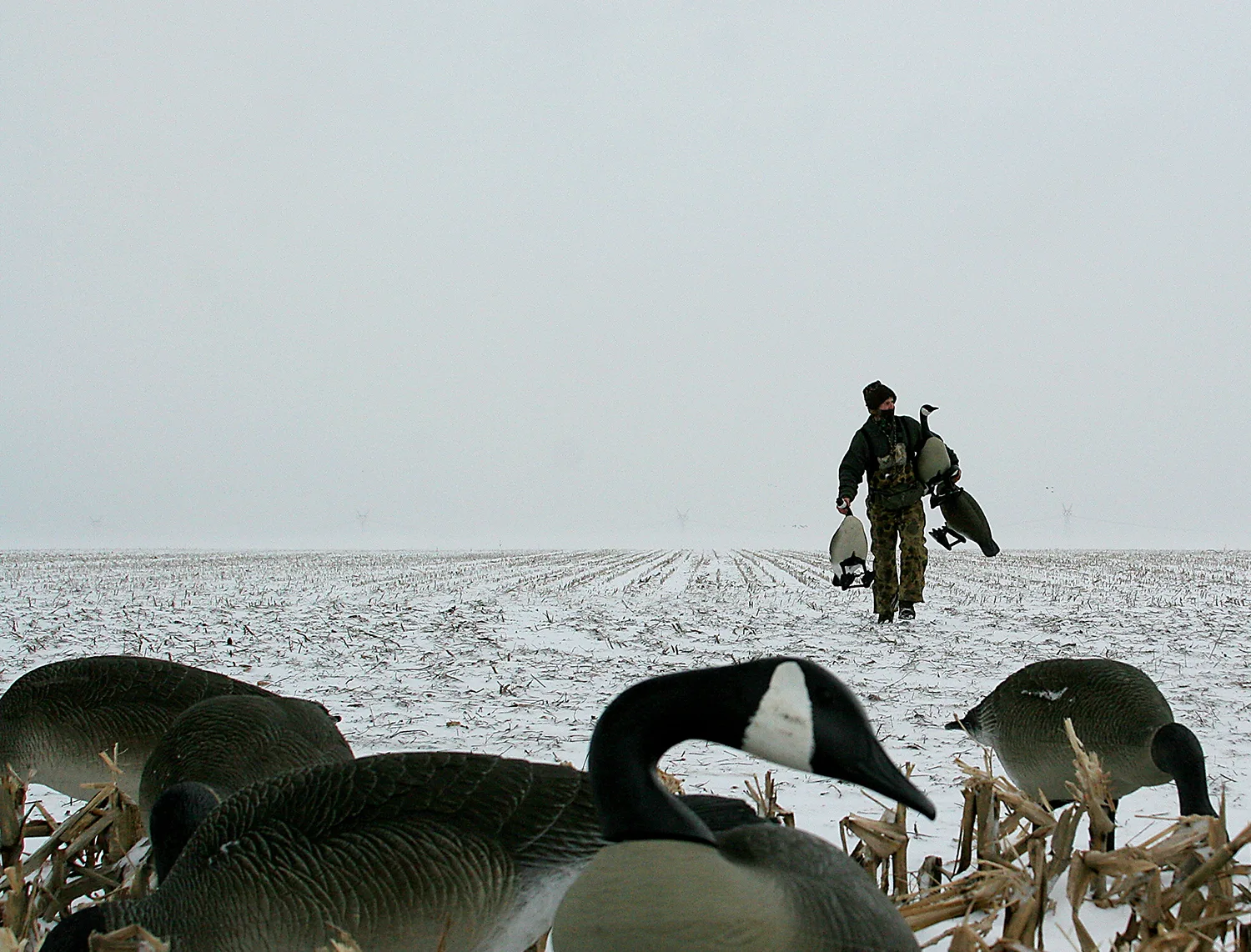
My starter rig consisted of a dozen full-bodies and three dozen shells. It was an easy rig for one person to handle. Bagged up, it all fit, Tetris-style, into the back of the Jeep I drove at the time. Since then, I have added more full-bodies plus sleeper shells, silhouettes and floaters. I have more decoys than my short-bed pickup can carry and more than I want to put out all at once. My wife, who comes from a non-hunting family, asks why I need “all these decoys,” to which I reply that I am an artist, and I need to be able to choose among the various decoy types in my palette to paint the most lifelike picture of feeding geese for a certain time or day. She doesn’t believe me. I don’t believe it, either, but it’s my excuse for owning different kinds of decoys.
All my decoys actually do have their uses. Full-bodies are visible and realistic, and they move in the wind. I like Avian-X honkers, because they look good and they have clever retractable bases that cut pick-up time in half. With some full-bodies—the kind that have a cone-shaped opening for a motion base—I can skip bases altogether and set them on cornstalks. The elastic grab loops on the tails of many full-bodies now let you carry three or four in each hand.
Shells stack and store quickly, and that goes double for one-piece sleeper shells. Shells also pop against a background of snow. They accurately simulate Canadas, which will flop onto their bellies as soon as they land in a snowy field on a cold day. I can set a dozen full-bodies and a few sleepers to represent a content bunch, with some birds still feeding while others have eaten and are taking a nap.
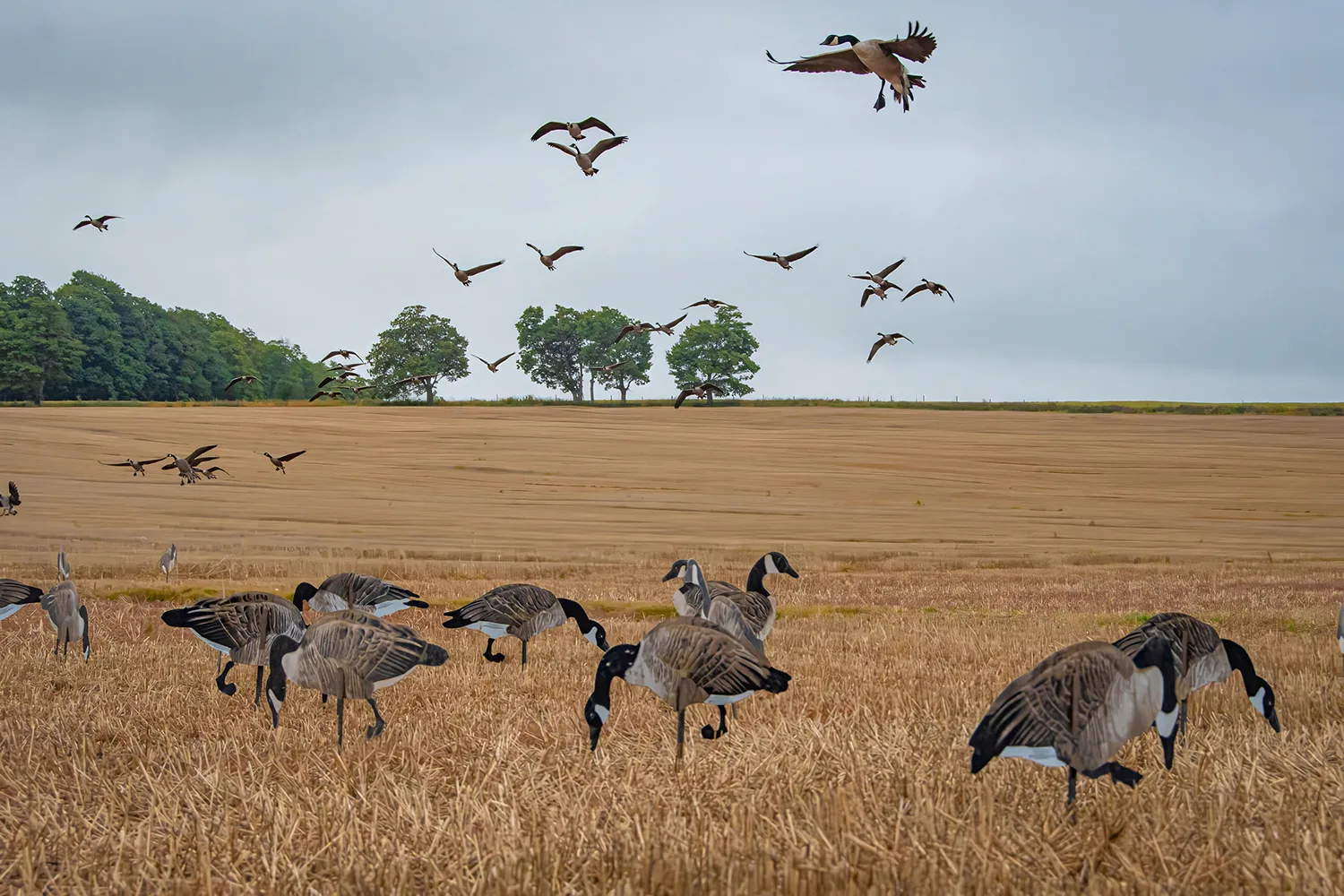
Silhouettes—the modern, lightweight, coroplast kind—are a boon to solo hunters. Mine are Dive Bombs, but almost every decoy company offers something like them. They weigh six pounds per dozen, they are easy to pack and they set up fast and pick up faster. If I need to set a big spread, which for me is 100 decoys, I bring silhouettes. Also, sleeper silhouettes look great at the edge of a river sandbar when they complement eight or 10 floaters.
A trenching tool (e-tool) for digging blinds into the snow, a flag, calls and a blind bag make up the rest of my goose gear. The blind bag contains snacks, shells and a pair of electric snowmobiling mittens to warm my hands while I wait for the geese to fly. Geese can see the motion of a T-flag farther than they can hear a call, and it’s tough to blow a bad note on a flag. It’s easy for me to blow bad notes on a call, though, and one more advantage of hunting alone is that no one but the geese ever hears my garbled clucks and honks. If duck season is still open, I’ll add a spinning-wing duck decoy on a remote that I can shut off when geese appear.
Whenever feasible, I’ll pack two guns, because the best field-repair kit is the gun case with the extra gun in it tucked alongside the blind. That second gun is often an over/under (it used to be a Red Label; now it’s a Citori), because O/Us always shoot, and who wants a backup gun to break down too? That said, the Benelli Montefeltro I usually shoot has never failed in any weather. My other main gun, a Browning B-80, is almost as reliable. I shoot 3" steel BBs and, while I can’t imagine needing anything close to 25 shells to shoot three geese, I am not running out, either, and usually pack at least a box and a half just in case.
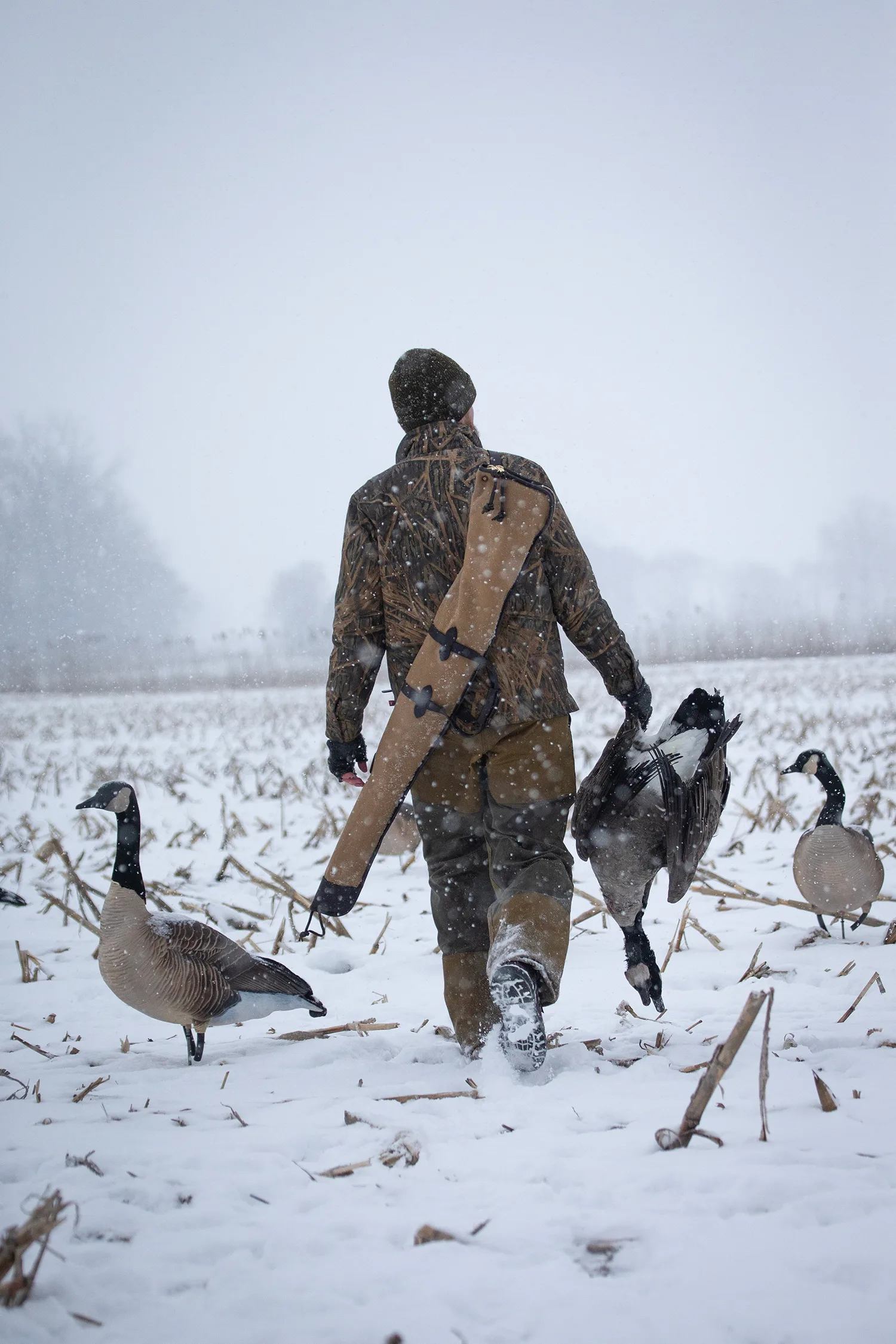
Three dozen full-bodies and a bag of shells fit in the bed of my truck. The blind and silhouettes go in the back with the seat folded up, and everything else I stuff into the passenger seat. If we have enough snow to make driving into a field unwise, I ditch the extra gun and all but a few dozen silhouettes and put a Jet Sled in the truck. The distance I am willing to haul a sled holding decoys, a blind, shells and a gun diminishes every year, but I will do it if there are enough geese using a field.
When I can drive in, which is most of the time, I still rarely use more than three dozen decoys, and usually I set a few less. While I have a solo-hunting friend who will hunt over four or five decoys, I don’t have the nerve to put out fewer than a couple dozen. The best decoying hunt I ever had was over a spread of 30 full-bodies on a day when I hunted solo by default, because everyone I invited along said it was too cold to go.
While I’ve had plenty of other great solo hunts, this one stands out as the textbook example of what a good hide and just a few decoys in the right place can do for the lone hunter. Honestly, my friends were right: It probably was too cold to hunt—about zero with a 25-mph northwest wind. But it was the last day of the season, and I had permission to hunt a field full of geese. I hid the blind in some grass in a terrace and set up the Avian honkers. The other 18 decoys went either on cornstalks or on their bellies in the snow in my usual “relaxed U” pattern. The opening of the U faced downwind in what I hoped was an inviting manner.
Minutes after I made the cold walk back from parking the truck to the blind, I had a bunch of geese in the decoys. I’d brought the O/U, thinking it would be certain to work in extreme cold. I had to shoot the first bird twice, so there was no chance to double; but I didn’t mind at all since the goose I shot turned out to have a band on its leg.
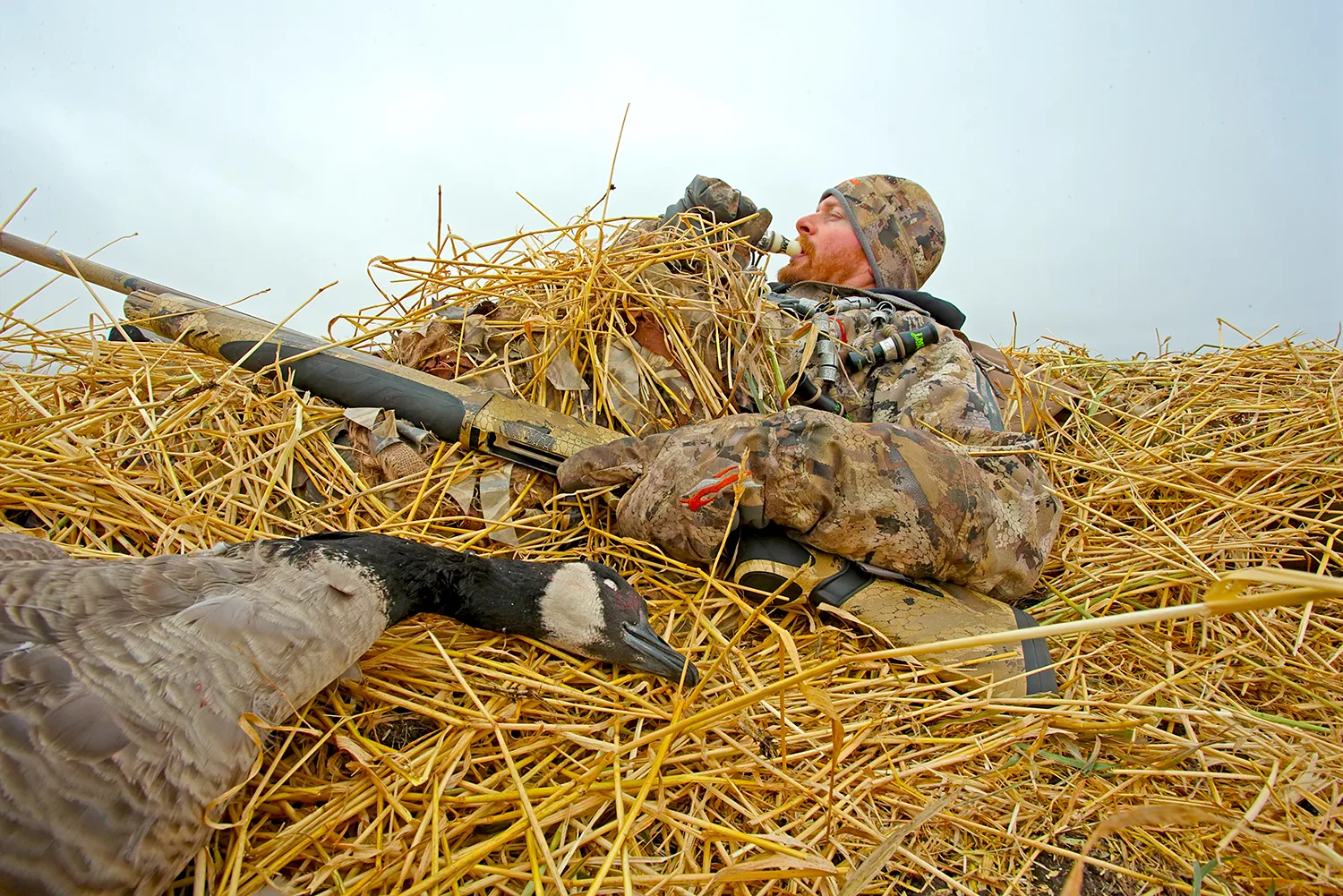
From that high point, the hunt got better. The next group—15 or so—was already low and skimming the stubble when I saw it. Fighting the wind, the birds crawled across the field to the decoys in what was probably seconds but felt like minutes. They were close enough that I could hear the wingbeats as they backpedaled in the lee of the terrace where I hid. I shot one, thought about shooting another and decided that I wasn’t ready to be done after 10 minutes of hunting. A short time later a single bailed out of a flock working overhead and parachuted straight down into the decoys. It also had a band on its leg. This is another advantage of hunting alone: I always know who shot which birds. There was no arguing or drawing lots to determine who got the bands. They both went home with me.
Read our Newsletter
Stay connected to the best of wingshooting & fine guns with additional free content, special offers and promotions.