From our November/December 2026 issue
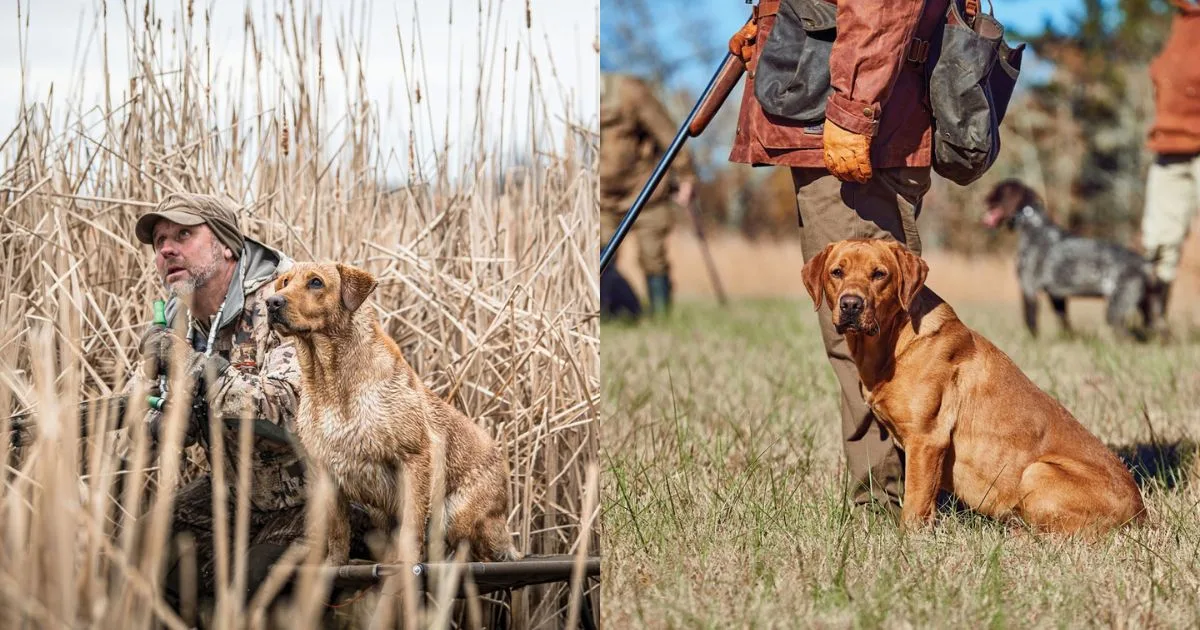
The November weather hadn’t been severe enough to fracture the brown, dried stalks of saltmarsh cordgrass, and the mid-tide hunts at Cape Cod’s Hatches Harbor were on fire. The tops of the grasses were tall enough to conceal my layout, while they were low enough so I could scan the two-mile stretch from Herring Cove to Race Point. Pepper, my buddy’s black Lab, liked this spot because it was easy for him to spot flocks of eiders, surf scoters and old-squaw well before they pitched in. In between flights, I’d look out to sea for as far as I could and imagine I could see the Labrador Current, which runs from Cape Cod all the way to the Canadian Maritimes.
A different type of Labrador current has flowed through America’s veins for more than a generation, but this one doesn’t include seawater. This one is a love affair with dogs—more specifically, Labrador retrievers, which ranked as the American Kennel Club’s most-popular breed for 31 consecutive years. (That recently changed when the French bulldog, a breed made popular by celebrity ownership, dethroned the Lab from its lofty position.)
The concept for a super retriever began as a need on British fishing boats in the 1500s. Cod have bony mouths and, as hooks frequently pulled during the landing process, a dog was needed to fetch the fish. The dog needed to be biddable and to fit in with the confines of life aboard a fishing boat. It needed to be able to jump overboard and navigate in heavy currents and icy seas. The dog had to have a soft mouth, so as to return the fish in perfect shape. The original dogs likely were a blend of otter hounds and descendants of the French Saint Hubert’s hound, which were used when hunting stags and deer.
The Admiralty records of the British Navy show that 250 British vessels fished off of Newfoundland in 1605, so it’s likely that a good number of these water dogs accompanied the fleet. Breeding continued along Labrador, the coastal part of Newfoundland, and land-based hunters valued the same attributes to retrieve waterfowl. They liked that the dogs’ short hair was weather-resistant and wouldn’t ice up as it did with long-haired dogs. The emerging water dog had a long, thick “otter tail,” which served as a natural rudder to efficiently direct the dogs toward game.
The Brits and Newfies continued their respective breeding programs, and in the 1800s, visiting British noblemen saw some characteristics they favored. When they returned home, they used the foreign dogs as out-crossings with dogs in England, Wales, Ireland and Scotland. One of these noblemen, James Edward Harris, the 2nd Earl of Malmesbury, is credited with naming the dogs after the Labrador coast where they were developed. Immigration brought some of these pups to the States, and in 1917 the first Lab was registered in the US. In the 1920s and ’30s, additional dogs were brought stateside from England, and the breed took hold.
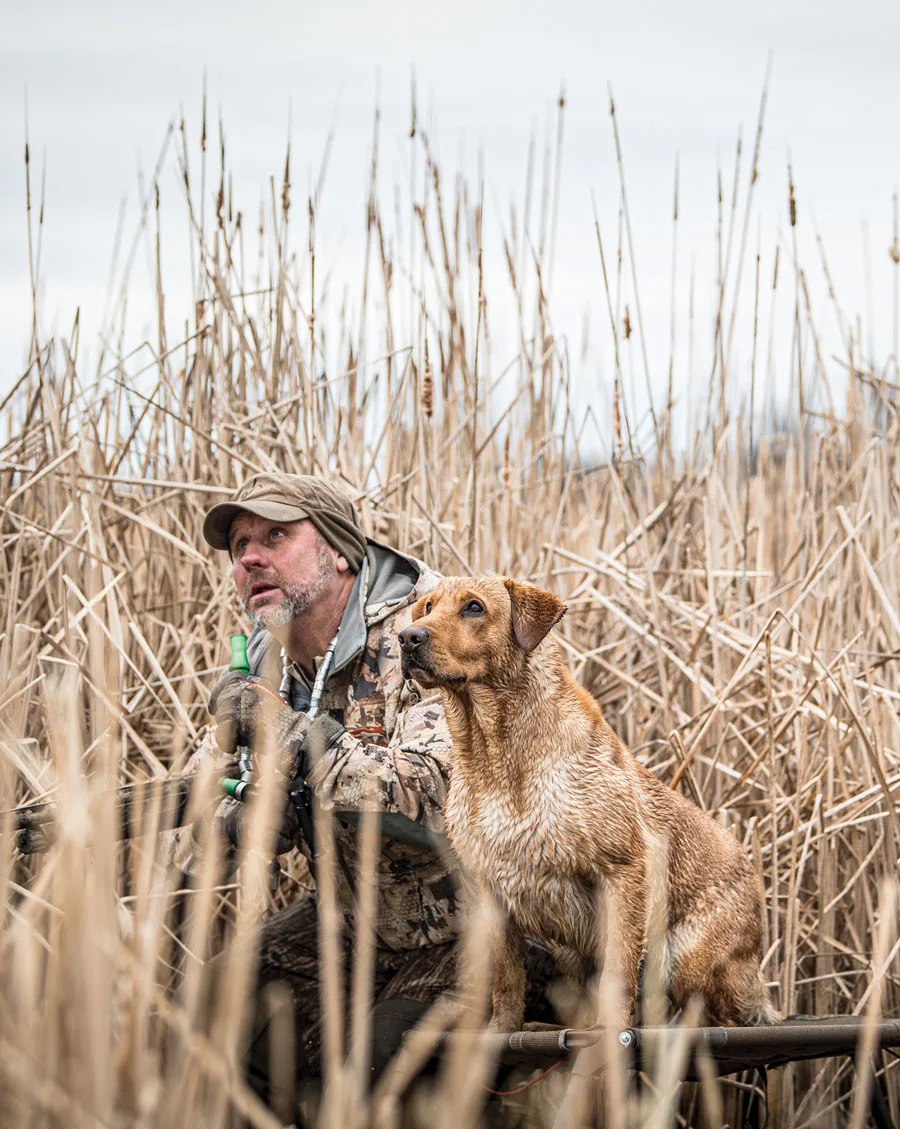
The American Labrador Retriever
Physical height: 21” to 25”
Weight: Male 65 to 70 pounds, female 55 to 60 pounds
Disposition: Friendly, athletic and driven
Coloration: Black, yellow, chocolate
While the overwhelming majority of Labs are used in backyards, highly selective and discerning hunters and field-trialers pick from some of the best-bred dogs in the country. Fans of the American Lab look for a longer-legged dog with lots of drive and athletic ability. The result is an agile, hard-charging dog that runs fast over greater distances.
Arkansas’ Chris Akin owns Webb Footed Kennels and has trained more than 4,000 dogs. He has produced more than 500 Hunting Retriever Champions, more than 200 Master Hunters and nearly 100 Grand Hunting Retriever Champions. “I’m a duck hunter through and through,” Akin said, “so the Lab is a natural fit. My personal dogs are with me and my family 365 days a year. Their personality, loyalty and affection are unbeatable. Labs are used for waterfowl hunting, upland hunting, in field trials and hunt tests, for detecting bombs and drugs, you name it. That’s because the Lab knows one thing, and that’s how to please his master. Some dog breeds don’t do well with upper-level training, while others can be aggressive or a one-handler dog. Labs are all-purpose dogs, so there is something to be said for that.
“I had a young dog that wasn’t coming together, so I went to Labrador retriever guru Robert Milner about a dog. He had one I really wanted, but I couldn’t afford him. Mister Robert realized I was pretty serious about dogs and training, and when I was about to leave, he just gave me that dog. I’ve never forgotten that, because it really was how I got into the training business. Back then, American Labs were big, not that smart and had a lot of health issues. Selective breeding of field-trial and -testing champions has dramatically improved the breed. The 100-pound Labs of yesteryear are now much leaner. I like males that are between 70 and 75 pounds and females in the 50- to 60-pound range. Their hips, eyes and elbows are all solid, and one thing is for sure: American Labs these days have a tremendous amount of drive, stamina and ability.”
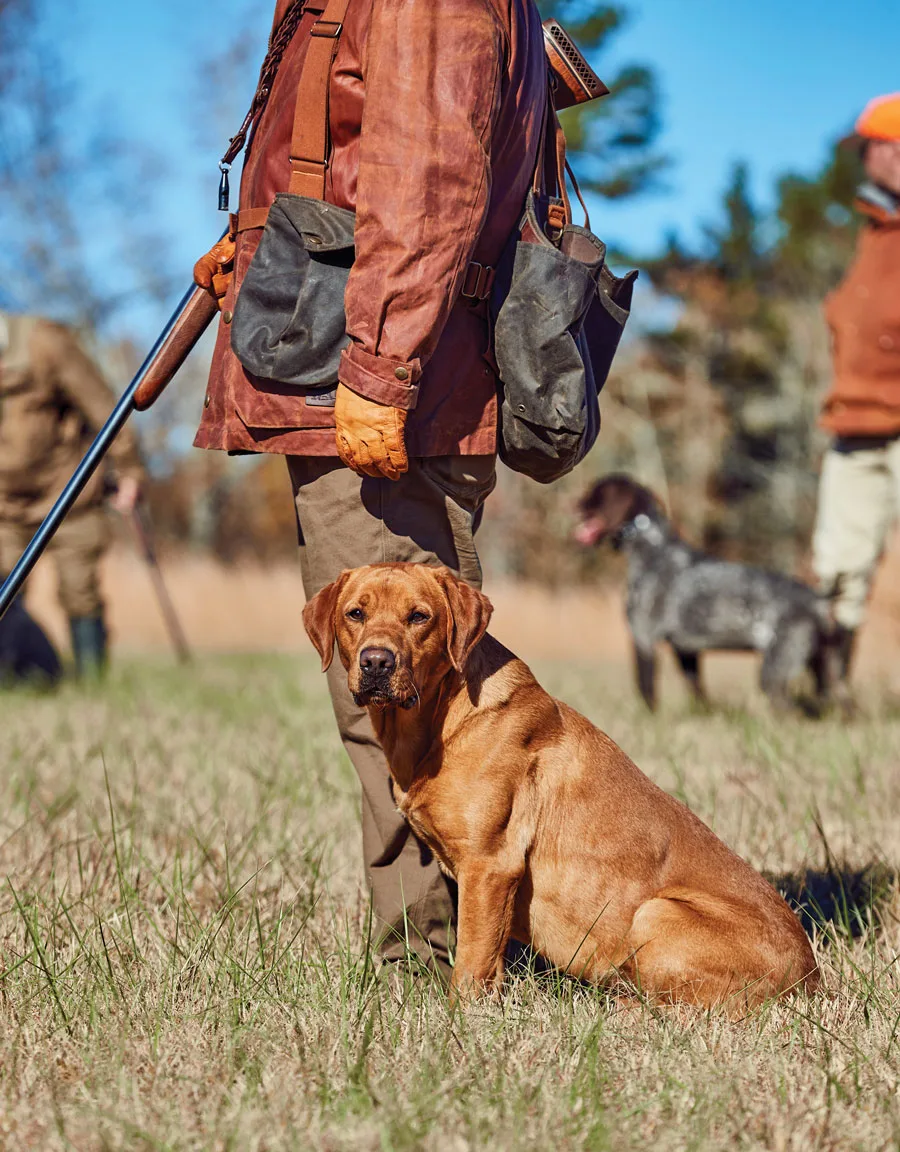
The British Labrador Retriever
Physical Height: 22” to 22½”
Weight: Male 45 to 50 pounds, female 30 to 40 pounds
Disposition: Calm, with a deep desire to please
Coloration: Black, yellow, chocolate
Note: England’s The Kennel Club regards the fox-red coloration as yellow and does not recognize silver.
While Akin stuck with American Labs, the late Robert Milner was the first to import British Labs through his Wildrose Kennels, which eventually was purchased by Mike Stewart. In those early days, a dog from the British Isles was referred to as a British Lab. (Not to be confused with English Labs, which are typically stockier, with broader heads and thicker tails, and are mostly bred as pets and for the show ring.) By matter of discernment, winning field-trial dogs that are bred may not necessarily be from England. Those bred in Ireland may be referred to as Irish Labs, while those with Scottish, Irish, Welsh and British lineages may simply be called UK Labs. Regardless of their country of origin, these Labs are bred for traditional walk-up hunting and driven shoots. Dogs heel quietly close to the handler, and they work in tighter cover. A more-compact and calmer dog is required for these different disciplines.
Before he died, Milner told me he believed that “the biggest differences between British and American Labs come from the values that are favored in field trials. The number of Field Trial Champions and RUCH [Runner Up Champion] titles determine which dogs are bred. Dogs that win do so based on the values possessed by the judges. But the criterion for winning in the UK is different from winning in the US. In the UK, field-trial judges require excellent manners from dogs. Dogs need to sit absolutely still. They must exhibit no movement and be calm, even when there are hundreds of birds in the air and shotguns are discharging. Judges have zero tolerance for noise, so no barking or whining is allowed. When running marks and blinds in the UK, dogs are allowed the latitude to figure out the best route, whereas in the States, dogs look to the handler for direction. In the UK, dogs must bypass dead birds and first track cripples—which contributes to their strong noses and excellent bird smarts.
“In the United States, handlers have a far more active role in field trials. Compulsion training methods are used, and field-trialers are very vocal and animated when directing their dogs that run blinds. When dogs are running marks, their lines need to be run straight, and the most direct routes are highly prized. To accomplish that, trainers must perform regular, routine and repetitive drills to get their dogs focused on running those straight routes. Obedience is developed through this constant running of lines, marks and blind retrieves, and that means American handlers are far more involved with the dog’s run. American judges like to see dogs when they’re on the ground, and if a dog runs out of sight, then it is considered out of control and is usually disqualified.
“In the UK, dogs are tested on their game-finding abilities, steadiness and control. Positive training methods are used to build cooperative dogs that work with and for a handler. These dogs need to work well in low-volume walk-up hunts or during the commotion associated with high-volume driven shoots. Dogs must mark and retrieve game even if it means they are out of sight. They must show drive and enthusiasm when at work and be quiet at all times.
“The dramatic differences between British and American Labs are one reason American Labs are not seen in British competitions. It’s also why British Labs aren’t seen in American competitions. But neither is better than the other. They’re just different, and that’s where the beauty lies. Any owner, handler, competitor or hunter can find a dog that matches his tastes, preferences and working requirements. Selection comes down to personal choice, just as it always should.”
The American-versus-British Lab debate is similar to the differences in our countries’ flags. While both are red, white and blue, the Stars and Stripes’ pattern is different from the Union Jack’s. Labrador retrievers are similarly different—and that’s just one more thing we love about them.
Tom Keer is a freelance writer who lives on Cape Cod, Massachusetts. He loves all sporting dogs and is a setter man.
Read our Newsletter
Stay connected to the best of wingshooting & fine guns with additional free content, special offers and promotions.