
From our September/October 2026 issue
It has been 25 years since the founding of Caesar Guerini, in Marcheno, Italy, just upstream on the Mella from the gunmaking hub of Gardone. Yet the company’s impact has been so dramatic that it’s difficult to recall the American shotgun marketplace before Guerini.
The company now comprises three brands—Caesar Guerini, Fabarm and Syren—and has made a massive impact in the US, with broad offerings that achieve high standards of performance, durability and finish through the latest engineering and manufacturing technologies.
The founding brothers—Giorgio (sales) and Antonio (engineering) Guerini—came up in the business working for their uncle, Battista Rizzini, but parted ways with him in 1999. The Guerinis were keenly aware of the efficient creativity of computer-driven design and manufacturing and set out to build a different business model. They also knew that among the challenges Val Trompia makers faced, a self-inflicted indifference for American customers could be solved.
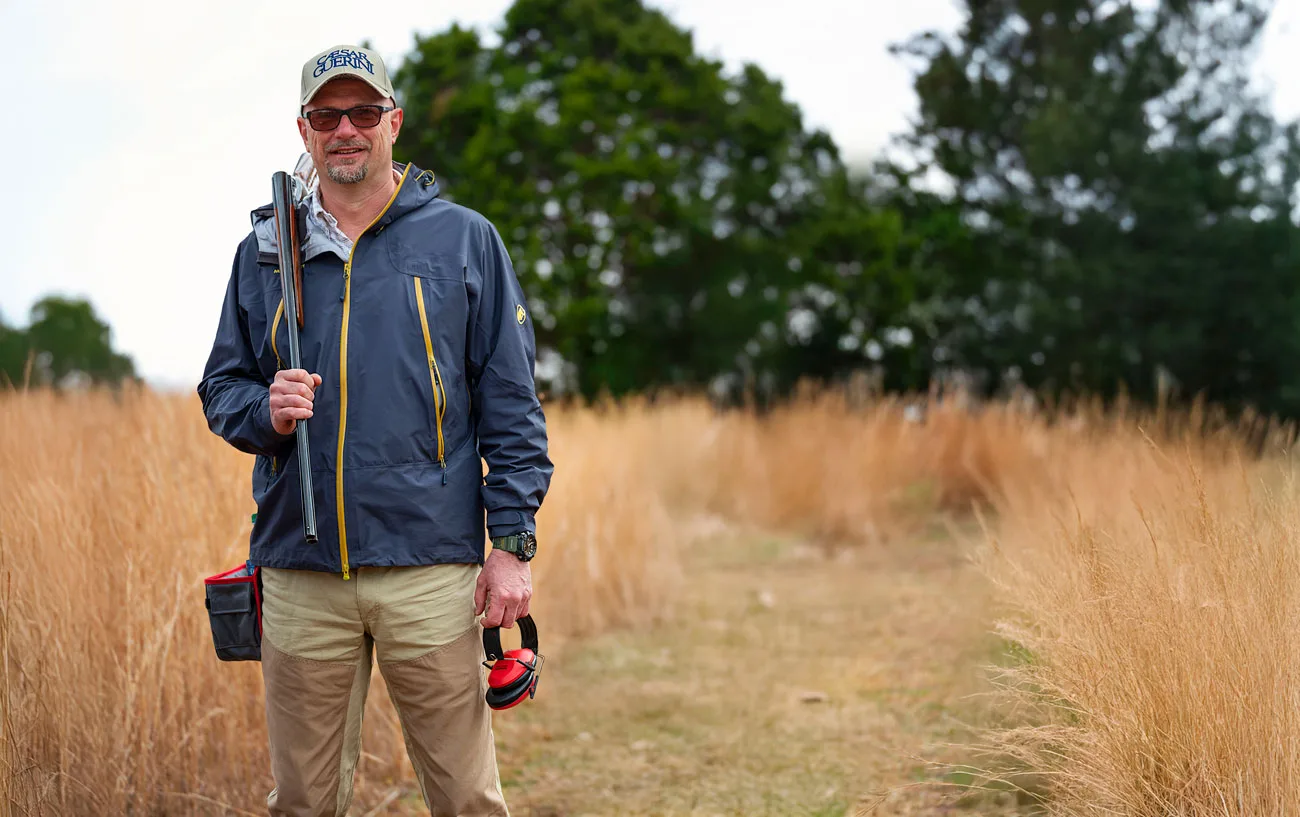
Enter Wes Lang. Growing up in New Jersey, Lang started shooting sporting clays when it was new, studied marketing and communications in college, and chose a career in the gun industry so he could make a living connected to his passion for shooting. Starting at a national gun wholesaler, he saw the growth of sporting clays while at Seminole Gunworks, then continued upward with stints at Beretta and Sig Arms before pivoting to become the Group Publisher, Outdoor Group, at eMap (which published magazines like Guns & Ammo). He also became an NSCA Master Class competitor and still enjoys sporting clays and hunting.
Lang met the Guerini brothers while working at Sig Arms, and shortly after the brothers formed Caesar Guerini, in 2000, partnered as president of Caesar Guerini USA. He shared the brothers’ zeal for modern, mid-market Italian shotguns made better, made for the American shooter and supported with the best marketing and customer service they could achieve.
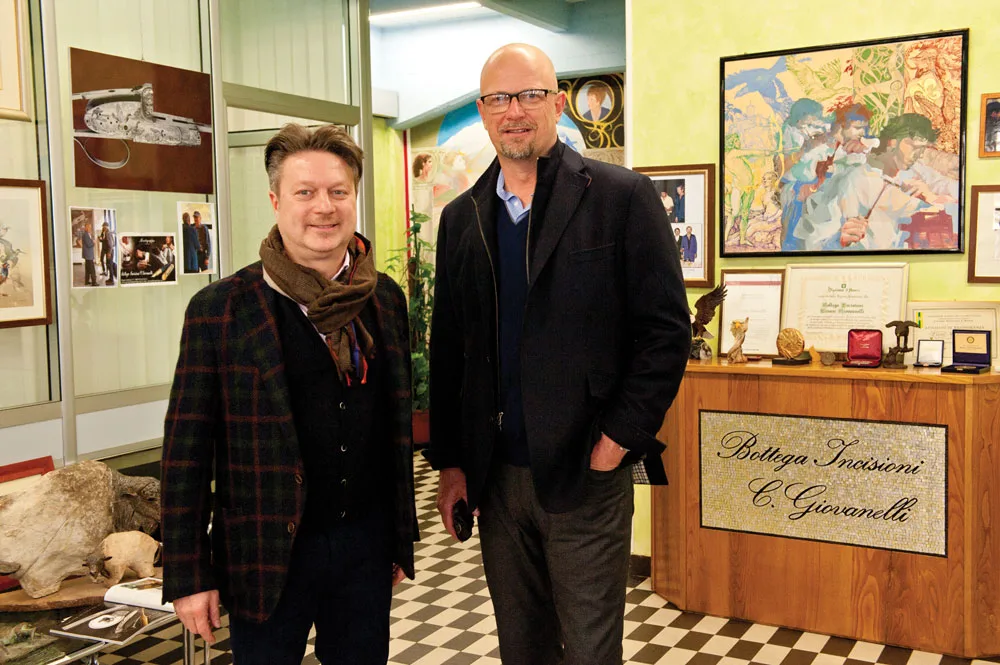
Today Caesar Guerini makes more than 40 over/under models ranging from utilitarian to high-grade guns, with granular variations at nearly every price point. Each is essentially built from the same core of machine-made actions and barrels. Recent technology drives everything from design and manufacturing to compiling data on inspections at import and on wear noted during customer service.
Caesar Guerini USA developed its Pit Stop program, offering customers free maintenance tune-ups, and in 2009 opened a custom shop at its Cambridge, Maryland, headquarters. In 2011 Caesar Guerini acquired controlling interest in Fabarm—Italy’s second-largest gunmaker after Beretta—and the following year launched Fabarm USA. In 2015 Guerini became the sole shareholder in Fabarm, and it has continued pursuing modernization, expansion and scale efficiencies for the companies together. In 2014 Guerini also launched Syren, a brand and product line designed for women that draws from both Guerini and Fabarm guns.
We recently had an opportunity to speak with Wes Lang about his background as well as Caesar Guerini’s 25-year history, the company’s business model and the future of shotgunning.
This interview was condensed and edited for clarity and readability.
What was your start in the gun business and your first experiences in the shooting sports?
My grandfather liked trap shooting on the weekends, so I grew up around the periphery of shotgunning. When I got old enough to handle a 12-gauge, I had a chance to try it, and that’s about the extent of it. No one in my family was an active hunter, so I didn’t have an opportunity to do that—although I kind of had a desire to go out and hunt.
I didn’t really get a lot of exposure to shotgunning until sporting clays came around. Especially in the beginning, sporting clays was described more as a simulation of hunting, and it sounded kind of fascinating. And the first time I tried it I was hooked.
Back then the sport was unique. People were going out with a five-gallon bucket with some shells poured in it and a Mossberg pump. There was no such thing as a “sporting clays gun.” There was nobody who could give you instruction. In hindsight, it was actually pretty cool to invent things as we went.
Did you go to college thinking you might combine your education with your love for shooting?
My grandfather started an advertising agency, and my dad eventually came in and was working in the agency when I was a kid. When my grandfather passed away, my father was running the business. In college I studied marketing and communications. When I was almost done with college, my father died in a boating accident. This left me at a big juncture, because my dad’s business really couldn’t run without my father, and I was still in school. So now I had to make a decision, and ultimately the agency had to be closed.
I had an epiphany when I read an article from a business review in which they surveyed 100 self-made millionaires and tried to find a common thread. Every single one basically said, “I never did this for money. I did it because I just love it, and the money came.” And I thought, Hmmm, that’s interesting, because I’m not great at things I don’t like. Sporting clays was really in my blood at that point, and I made the decision that I wanted to be in the gun industry.
When you got together with Giorgio and Antonio, what was the plan in terms of what unmet demand did you set out to fill?
Some of the needs I saw unmet for the American market came out of my frustration with guns coming out of Europe that were being designed with specs for how guns fit from a very European perspective. They were just not what US shooters wanted. I learned that you really have to drive product management from [the US], if you want it to click.
In the beginning, we were still basically writing on the back of a cocktail napkin, thinking about “What do we make? What kind of plan do we have here?” You can make very-high-quality, handcrafted guns with very skilled workmen, but you can turn out only a few guns a year and you have to charge a gazillion dollars for them. Or you can invest in a lot of equipment and make copies of existing guns and compete with all the other brands doing the same thing. We saw this big gap in the middle. We worked toward a center groove, where we thought we could make a gun that was way more sophisticated than the mass-production stuff but infinitely more reproducible and cost-effective than the handmade stuff. And that groove was where we landed.
We were all in our early 30s, and we understood modern machining—the computerization of machines. The real trick is knowing what to make them do, which is what’s so fascinating about it. That’s where you dig into the past and integrate things from the classics and program modern equipment to make beautiful guns.
Some people might say, “Well, you might be ruining things.” But my thought is: Do you still want to write out everything in longhand, or would you rather type it on your computer? It’s a crazy notion to think that you still should have to make a gun with a file.
How did dealers receive you early on?
We hit at a good time, because between when we started and 2008, when the country experienced a recession, it seemed everyone wanted a double gun. The dealers responded fairly well, with a little skepticism about “another Italian company.” We did business on a different model, because back then we were one of the few integrated companies, so factory support was available and viable. It wasn’t just an imported product, as we had the latitude to solve problems, help customers and have product support that you couldn’t have otherwise. If you make a great product and you have good marketing, then you don’t have to put as much emphasis on forcing dealers to stock up to the rafters.
How do you innovate every year and prioritize what needs attention? Describe a recent example of something you’ve been able to improve upon and where it came from.
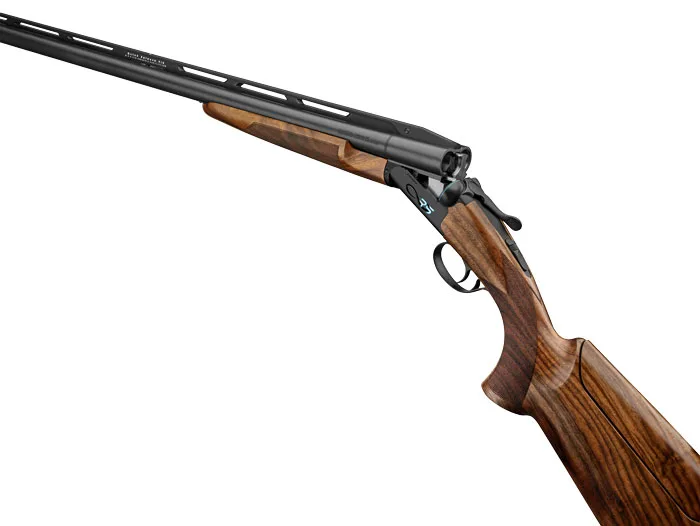
I came up with our target side-by-side, the Fabarm Infinite RS, because I’d always wanted a cool side-by-side—all the way back to the days of the early Vintage Cups. I could never find a side-by-side that I thought was worth using as a target gun. I wanted a gun that you could set down your over/under and pick this up and make a smooth transition. I had this idea for a gun with a slightly raised sighting plane, to be more comfortable for the over/under shooter, and the weight and balance and stock configuration of our competition over/under. Antonio made interchangeable ribs out of aluminum, lightening up the barrel set dramatically, and the gun balanced right on the hinge pin because of it. It really handles phenomenally and turned out to be a massive success for us.
Here in the States, we are the major vector of all the data going back to the engineering department, which has seven or eight engineers now, on how the product is surviving in the real world. Everything about every gun that comes in is logged into our software, and all that data is available in real time to Italy along with the ability to be able to quantify specific problems, which are all coded. If I want to know about something to do with ejectors, we can pull the specific data of the incidence rate of that, so we know statistically where we can improve things.
During and immediately following the pandemic there was an uptick in participation in shooting and firearms sales. For a number of companies, it now seems that the bubble may have burst. How has this affected your business?
The Italians were hit super hard by the pandemic, but our team was very lucky. Giorgio and Antonio were able to basically come through it without any delay in production, and after two or three months we were right back up to schedule.
The thing that changed the most was that [before the pandemic] we had a business model where we tried to keep a lot of inventory. If someone called up for a Summit with 32-inch barrels and a left-handed adjustable stock, we had it. We went from that to having nothing on our shelves. Production was not the problem; demand was so high that we were selling out a year in advance. It was a good problem to have, but some sales were lost because of delivery times, which was a very new situation for us. To this day we’re running at pretty much maximum.
Did you try to ramp up production or increase capacity, or were you reluctant to go in so big at such an unpredictable time?
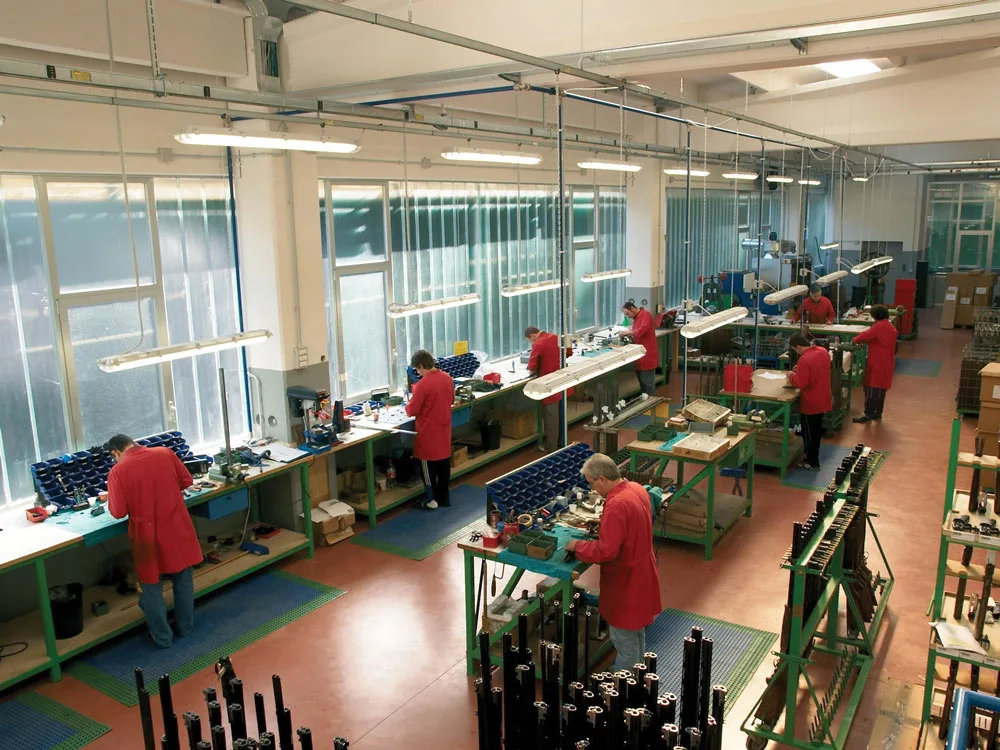
A lot of companies have died that way. Especially in modern production, you set up a production line that is dictated generally based on where the choke point is. This equipment is huge stuff and very expensive. If fundamentally the machine that makes your action frame runs 24 hours a day, what do you do? Put in another $2 million machine next to it? You can’t easily increase capacity.
Have there been any changes at the factory, such as new machinery or in the number of employees?
At Fabarm we bought the factory across from us, and we bought one two down from us to grow there. We bought the building next to us at Guerini. Since then we have bought an existing, much-larger factory in the valley, and it’s going to dramatically increase our square footage in about a year.
As the company grew and as our production became more computer controlled, the way that everything comes together to get a product this complicated and in so many variations became extremely sophisticated. The downside is we lost some flexibility. We do full custom stocks and custom engraving in Italy, but everything we can do here in the States we do, such as stock-fit customizations, wood upgrades and refinishing, barrel additions and more.
What was the benefit of acquiring Fabarm?
One reason was the investment. Fabarm supplied some components for us, notably barrels. We had a close friendship with the owners, and they were uniquely positioned worldwide and had their own designs, their own engineering. We saw clear production synergies we could utilize. It’s not our intention to make a Guerini a Fabarm or a Fabarm a Guerini; we work very hard to keep the two separate. But there are production efficiencies, like if you have a machine that makes a rib and it can make 10 trillion ribs, why would you have two of those?
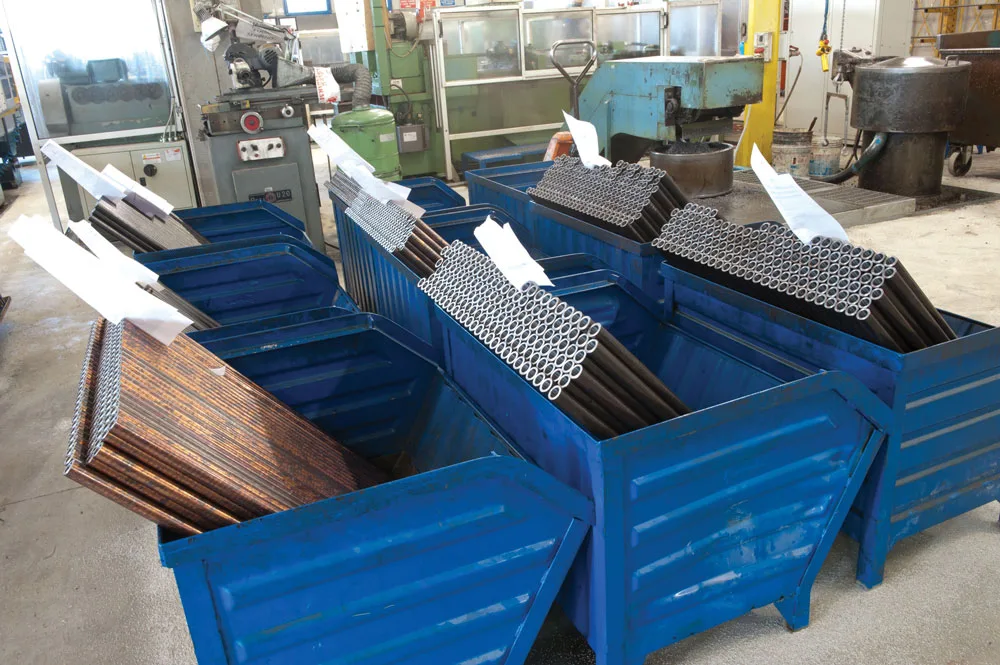
We manufacture all our own barrels, and we think they’re the best in production guns in the world. That’s one of the things that we make on the same equipment and in the same furnaces at Fabarm. The monoblocks and main components are made at Guerini.
With the prohibition on the sale of lead ammunition planned in the UK—and possible at some point in the US—do you plan to modify your guns for strictly steel-shot use?
All of our hunting models are steel proofed and have been for years. We do not have most of the target guns steel proofed due to the lack of demand and the additional cost to the consumer. If future regulations force the target market to convert to steel or other hard lead substitute, we are ready to respond in advance.
Your website calendar is full of events at which you plan to exhibit. What value do you get from attending trade and consumer shows and shooting events?
What we want is the opportunity to get out and meet shooters and build relationships with our customers, and it’s not cheap. How do you know, if you create 100 personal interactions a day, whether it’s worth it? At least half of what we do is customer-service at events. It’s our ability to connect with consumers face-to-face. We build those bonds by giving them free service on their guns, show them the new product and let them demo guns. That’s the way we strive to build brand loyalty. We’re one of the few companies that does that and by far on the largest scale. One of the reasons you don’t see more support in the industry is budget, but probably the biggest factor is it’s about working hard. It takes personal effort, because people have to hit the road and work on the weekends. We’re willing to work harder than other companies.
For more information on Caesar Guerini, visit gueriniusa.com.
Read our Newsletter
Stay connected to the best of wingshooting & fine guns with additional free content, special offers and promotions.